
Part One was about our trek in the Solukhumbu District. From there, Andreas and I returned to Kathmandu, reconnected with Steve and John, indulged in the delights of that fascinating town and then began planning our next trip. We decided to bus to the town of Dumre, walk up the Marsyangdi River valley to the village of Manang (132 km), go over the Thorong La (pass), through Muktinath and then follow the famous Kali Gandaki River to the town of Jomson or Tatopani. Information regarding conditions on the pass, transportation links and access to the still, closed-to-visitors, district of Mustang, all of which were on the other side of the pass, was vague at best (N.B. – This trek is now referred to as the Annapurna Circuit) Regrettably, in the end, I never got over the pass nor ever reconnected with my hiking buddies again, so those details regarding the ‘other side’ remain obscure to this day.
It was on the bus from Kathmandu to Dumre that I experienced my first bout of serious cramps and diarrhea (a tale told in Part One) but it was certainly not my last. Nonetheless, I was still feeling strong after three weeks of hiking in the Everest region and was able to keep up with the guys. This wasn’t to last.



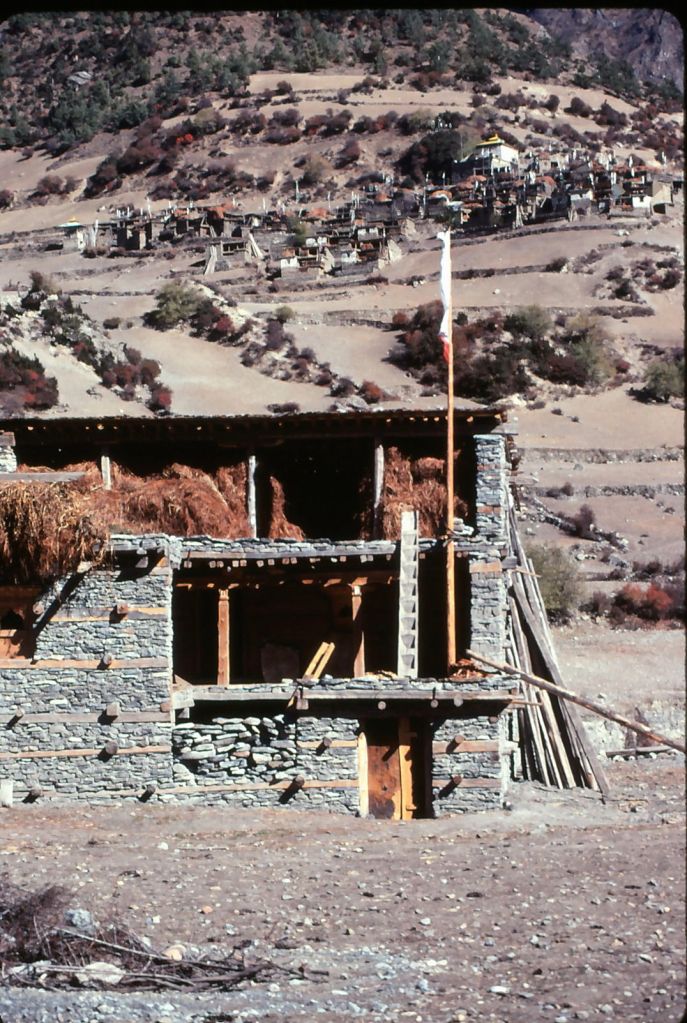
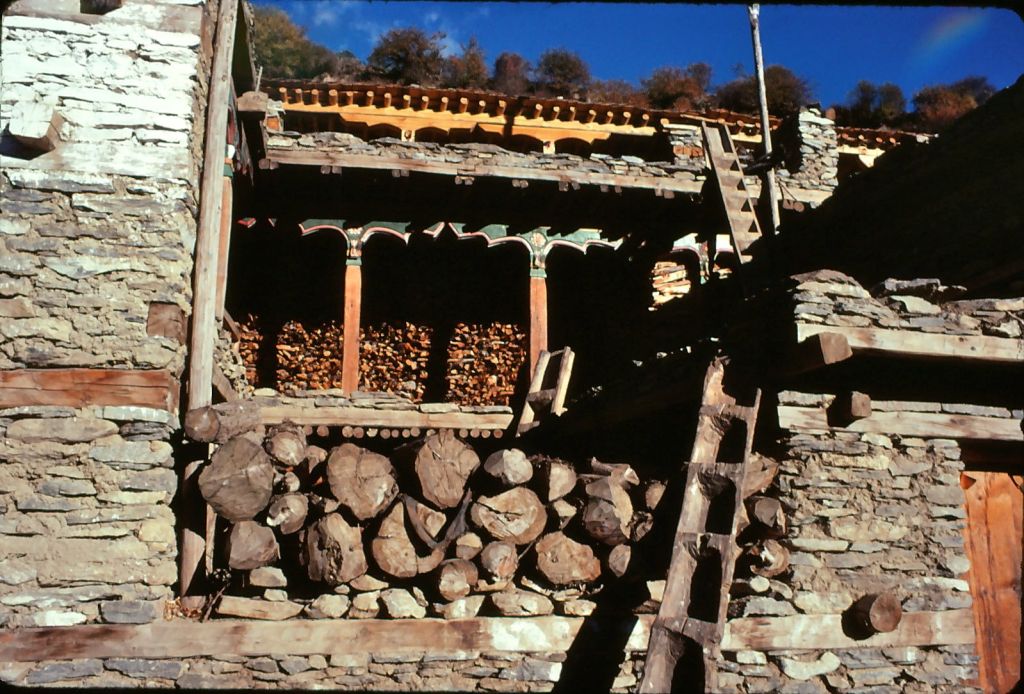
(Left) Animals on the ground floor, living on the main and fodder up top. (Right)Nice architectural detailing
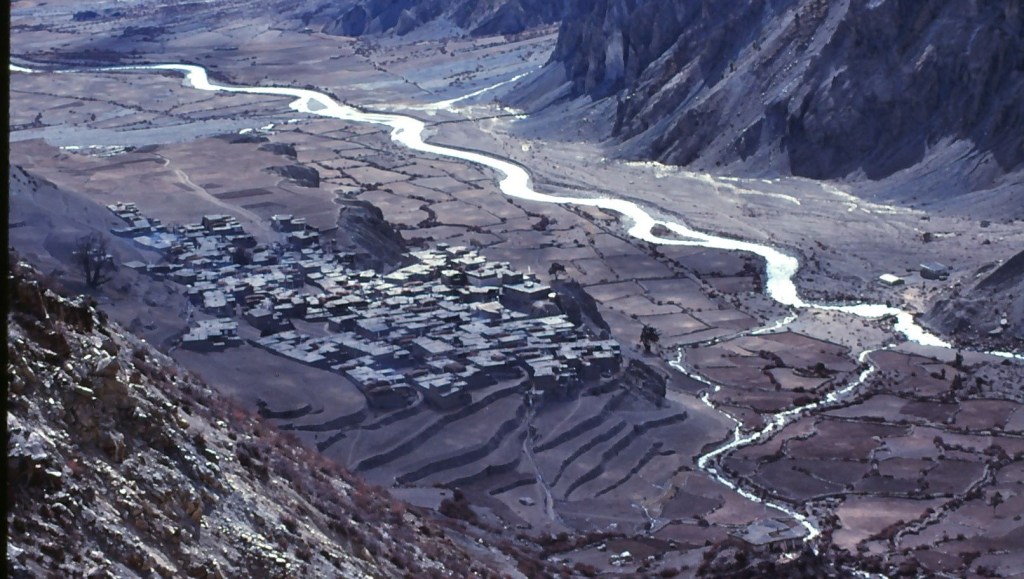
Unable to continue, I ended up spending the next three nights in Manang. During this time I met a group of American climbers who had a doctor on their team. Somehow (I don’t recall how) he figured I had amoebic dysentery and generously, gave me a course of an amoebicide from the expedition pharmacy.
Another day, while sitting propped up against the wall of a home and trying to gain some strength from the sun’s rays, an old man approached me and mimed ‘What’s up?’ I responded in similar fashion, as best I could. He then took my arm and began tapping on my wrist, where one would typically take a pulse. In my ignorance (or should I say arrogance) I assumed he was incorrectly copying what he’d seen practiced by some western doctor or nurse. After his assessment, he looked at me knowingly, then proceeded to pull out a dirty looking rag from amongst his equally dirty clothing and unwrapped a small brown lump of something organic-looking. He broke off a piece and encouraged me to swallow it. I took it in my mouth, pretended to swallow and left the bitter morsel under my tongue. I mimed my thanks profusely, saw him on his way then promptly spat out whatever it was.
Years later I was to learn that in the ancient practice of Tibetan medicine, pulse analysis is a highly refined art, requiring skill and in-depth knowledge. Regrettably, I was never to know the efficacy of his diagnosis and prescription.
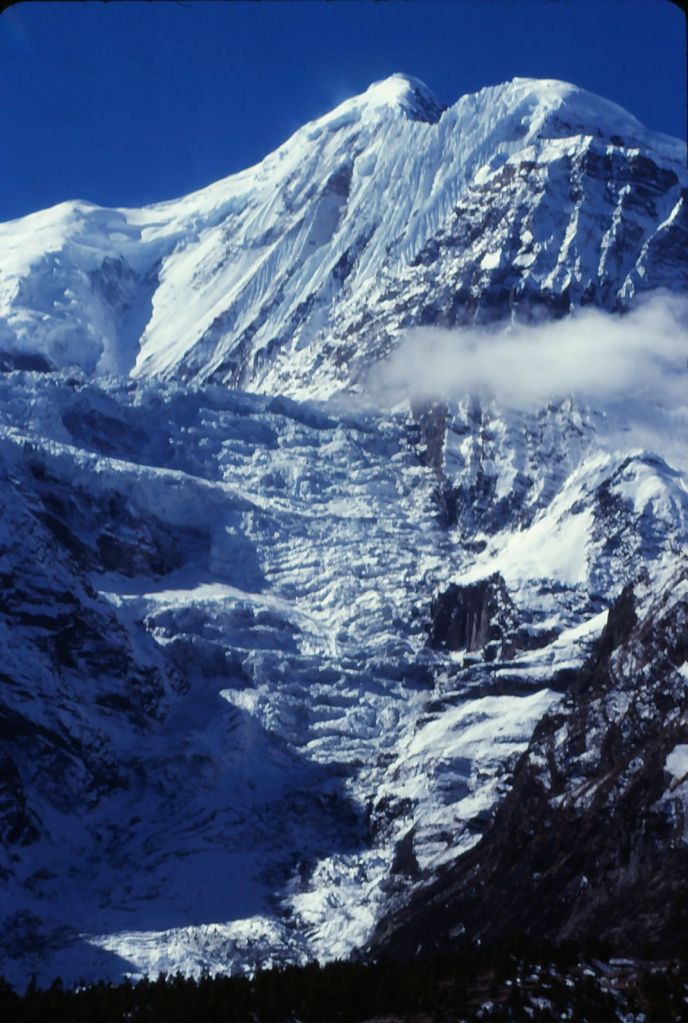
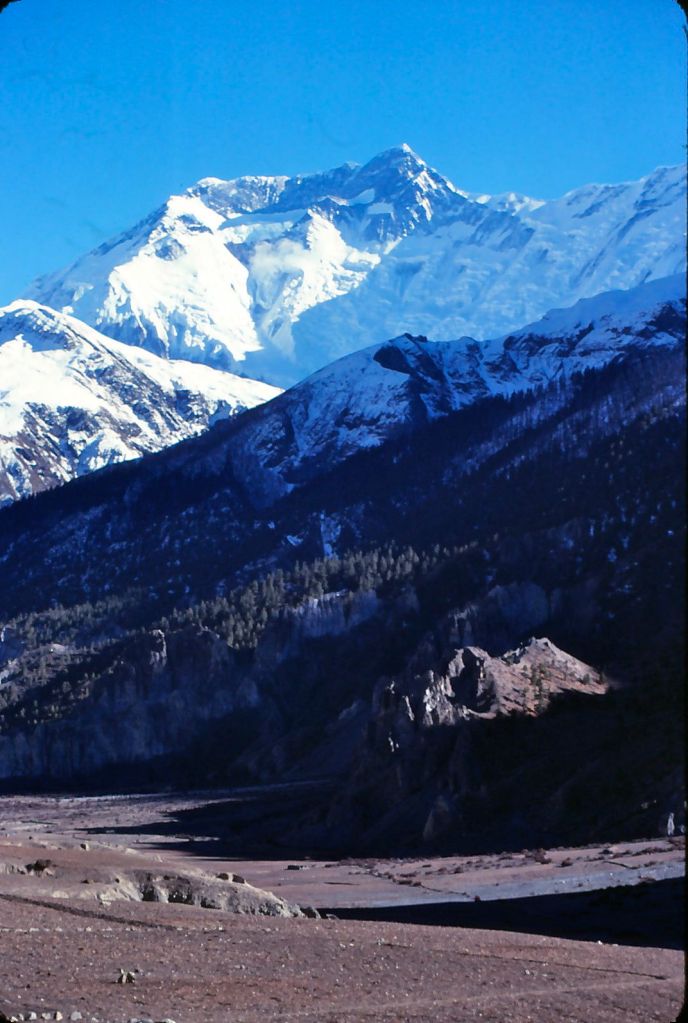
(Left) The view of Gangapurna from the outhouse of my accommodation in Manang. I spent a lot of time here, enjoying this stupendous view. (Right) Beautiful Annapurna II.
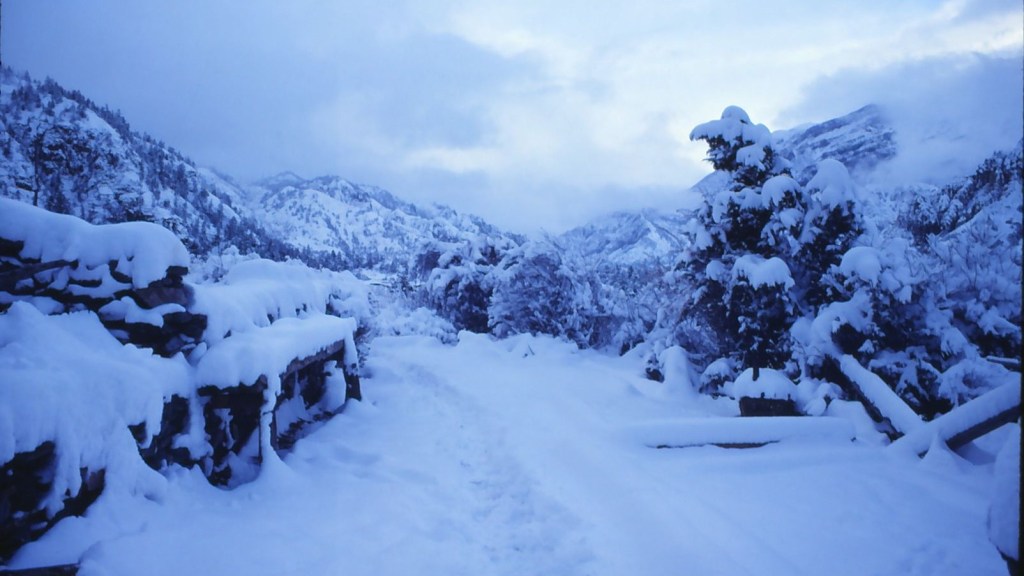

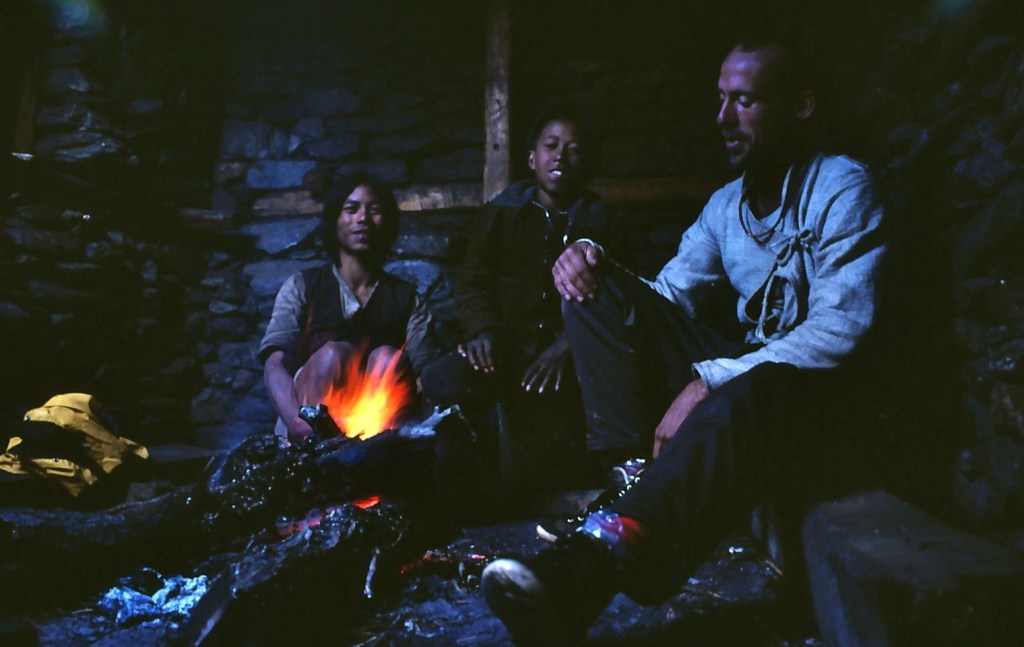


(Left) The manager. (Right) The hot spring.

 OVER THE HILL AND BEYOND
Dear Jim and Claire.. I thank you most sincerely for this amazing piece,,, which transports me to th
LikeLike
Testing…
LikeLike
Thanks Jim & Claire
You time travelled me back to a wonderful visit I had in Napal, ,,,,, & a younger me !
LikeLike
You’re most welcome Ken. Glad we could help relive some old memories. Personally, I need all the help I can get! 😉
LikeLike
Great story. How things have changed since the 70’s and 80’s hiking in Nepal! Your pictures bring back many memories. Interesting story about the Tibetan healer and his remedy that may have worked! Will be great to hear Claires and Nina’s stories of current conditions in Nepal for trekking.
LikeLike
Thanks Ella. Yes, big changes on the sub-continent. I would like to go back some day but wasn’t invited on the mother/daughter trek. 😉 I guess Claire told you that her hiking buddy Carmen, and Carmen’s daughter are going with Claire and Nina. I’m sure they’ll have much more fun without me along.
LikeLike