
I’ve wanted to write this post for a long time now. Though my 2-month long sojourn in Nepal happened 44 years ago, it remains one of the most formative experiences of my life and, I believe, shaped its future trajectory. Prompted in part by the women in my life heading off for a trek in Nepal in the coming months (Nov/2024), this blog post seems timely. I hope that the following photos and text impart some of the magic of that experience.
1980 was a big year for me. Construction in Vancouver was booming and my small company, Harvey Bros. Contractors, had just wrapped up a profitable contract, framing a spec-build home in West Vancouver. I paid off (& laid off) my crew, closed up shop, stored my personal effects in a friend’s shed, said goodbye to my girlfriend, bought a one-way ticket to Nepal, and hit the road for an open ended trip to Asia.
Afterward: Regrettably, the architect and engineer duo who were building the home in West Vancouver subsequently lost everything as interests rates soared to 17% and the housing market collapsed. My girlfriend, a lovely lady, whose lifestyle and young child represented a settled future I was not prepared for, ended up sending me, much to my relief, a ‘Dear John’ letter while overseas. She informed me she was now in a romantic liaison with my roommate and good friend. They subsequently married.
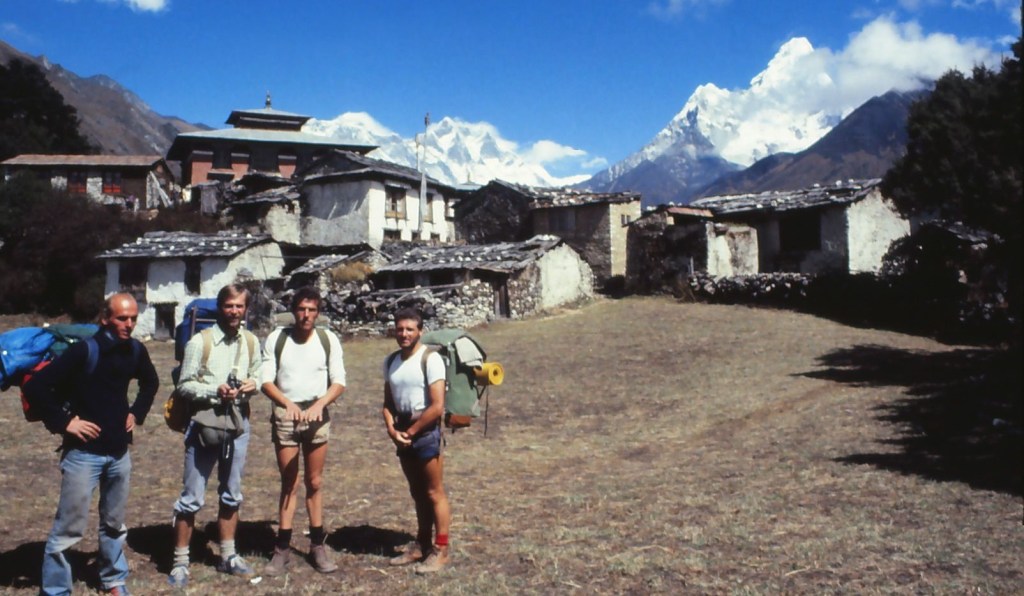
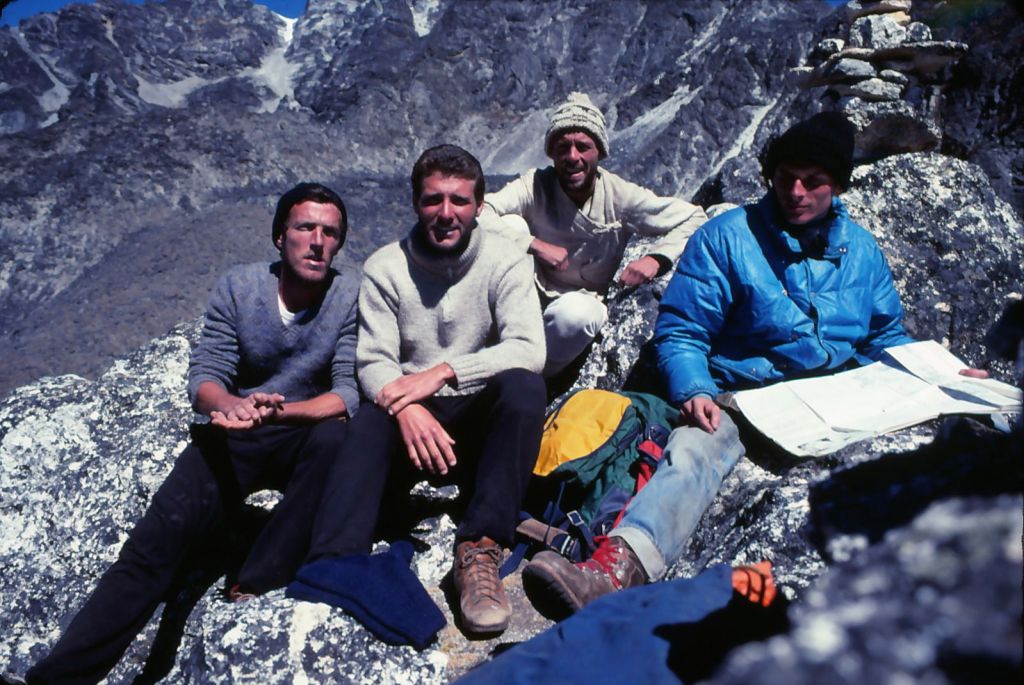
On the flight into Kathmandu I met a couple of Aussies of similar age and intentions as my own. We ended up spending seven weeks together doing two extended treks, one in the Solukhumbu region (Part One) and another in the Manang Valley (Part Two).
At the time, and as ridiculous as it sounds now, I felt that I had missed the boat. The days of wayward, adventurous, Western travelers discovering the delights of a city untouched by tourism seemed long gone by my arrival in 1980. Yes, those days were gone but Nepal and its people still offered a rich, diverse and wholly original (for me) experience, never to be forgotten.
Note: My old slides, stored inadequately and digitized poorly, leave something to be desired.
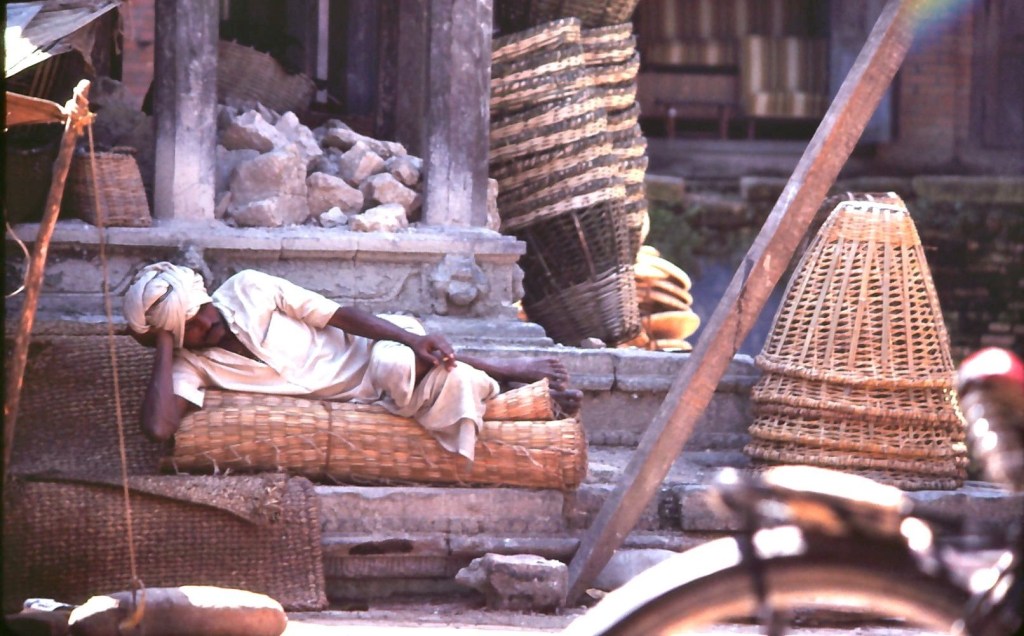
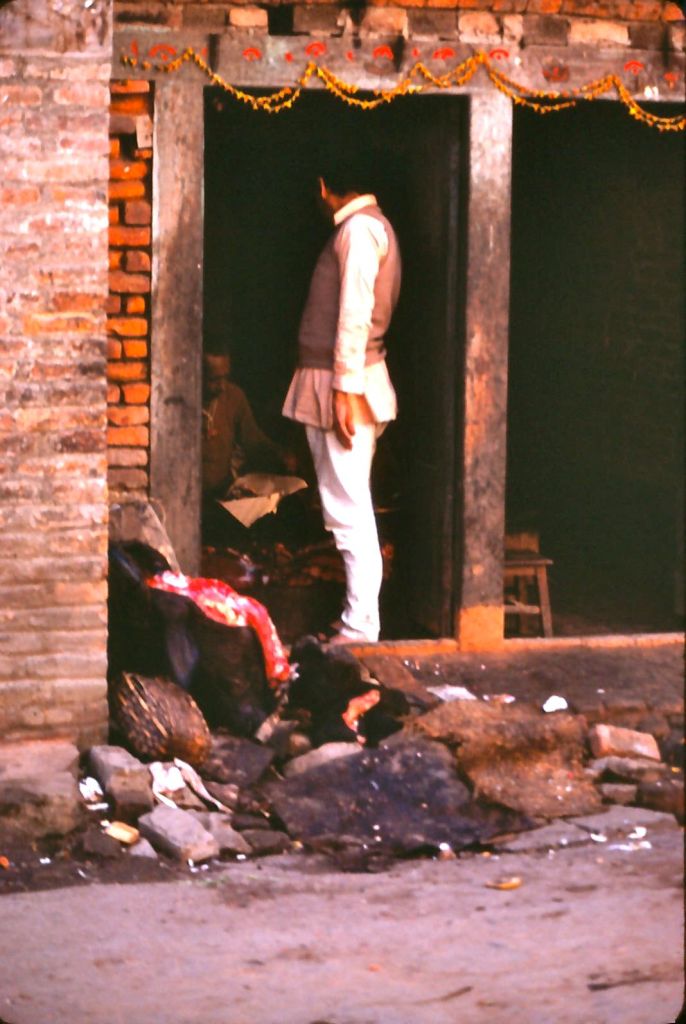
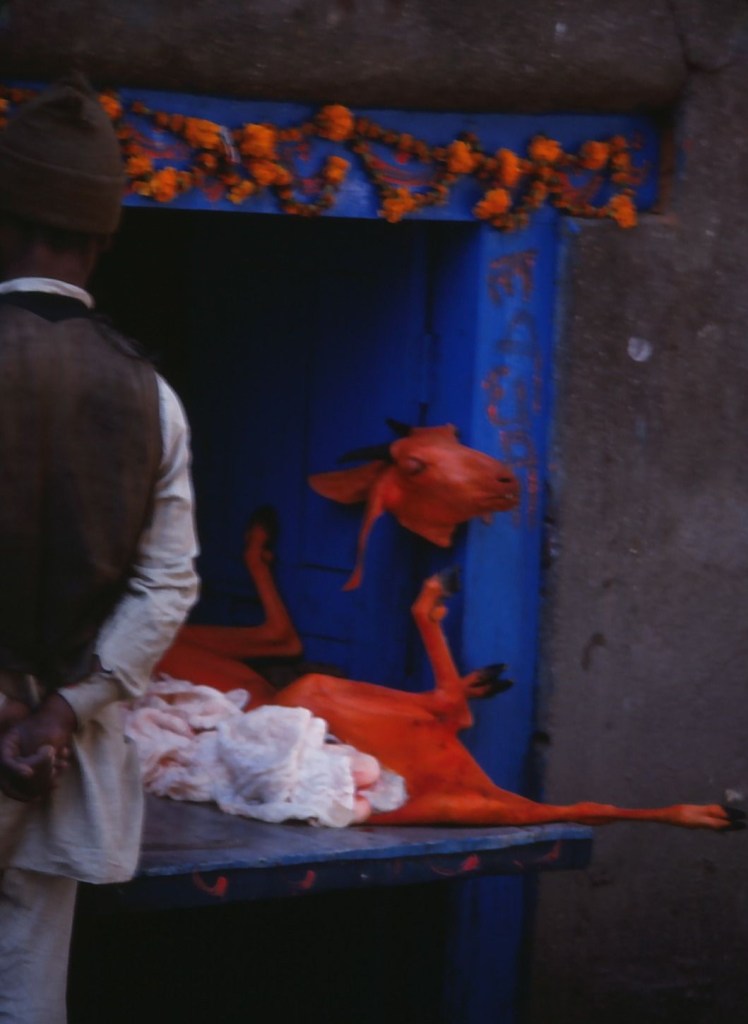
(Left) Buffalo butcher. Note the upside down head just outside the door. (Right) Goat butcher. Butcher shops were relegated, for religious reasons, to specific back streets so as to not offend the pious. One would think that the ever present rats and unsanitary conditions would encourage vegetarianism for many, but who can pass up a skewer of savory goat meat at a street side stall. Like so many visitors I would live to regret some of my culinary choices.


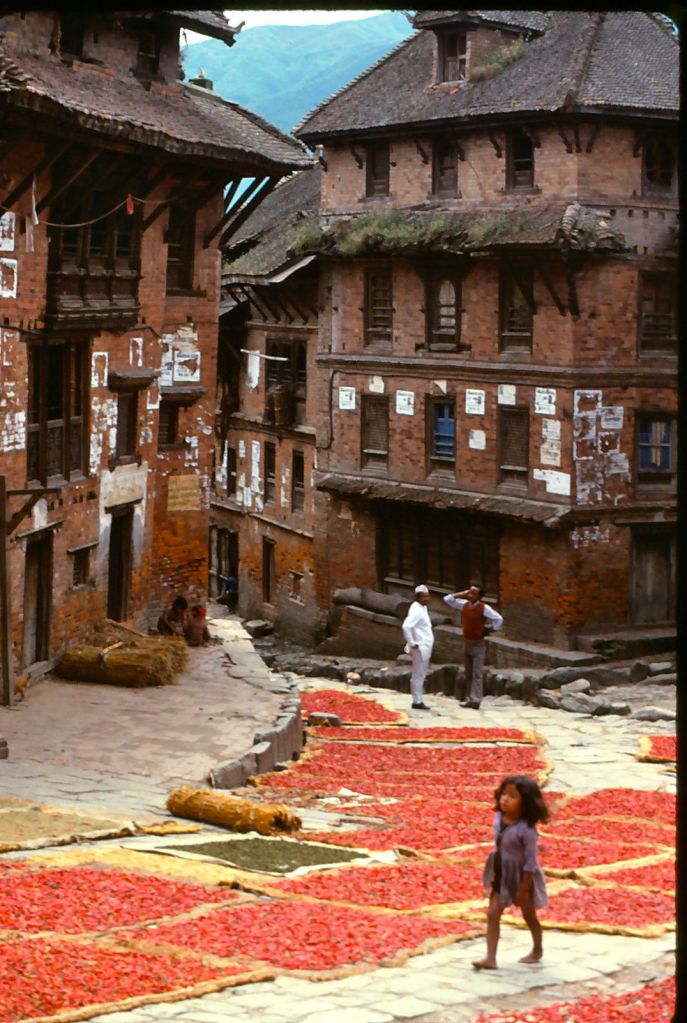
(Left) A cycle rickshaw wallah enjoying a chai in front of the ill-fated Bhimsen Tower – see note below. (Right) Peppers drying on a typical Kathmandu street.
The iconic Bhimsen Tower (only the perimeter wall is showing in the photo above), once the tallest structure in Kathmandu, was destroyed in the earthquake. 180 people were buried in its collapse. I include this photo because of what was, for me, a bizarre feature of the surrounding plaza. My modest hostel room was near to the square and every morning I couldn’t help noticing, on the open plaza, the many piles of human feces alongside the wall, and only meters away from the rudimentary, market stalls that would appear nearby. I later discovered that in 1980, only 2% of Nepalis had access to a toilet. The ‘Open Defecation Rate’ was one of the highest in the world. In the past four decades great strides have since been made to improve access to proper sanitation and Nepal was declared ‘open defecation free’ in 2019. Initially, my First World sensibilities were taken aback but I soon came to understand the reality of urban crowding in one of the poorest countries in the world. Coincidentally, a number of years later, I found myself managing a large, rural, potable water and sanitation project in a country with a similar open defection problem. Check out: https://overthehillandbeyond.ca/2024/03/08/nicaragua-1986-89-of-sandanistas-potable-water-spear-fishing-other-adventures/
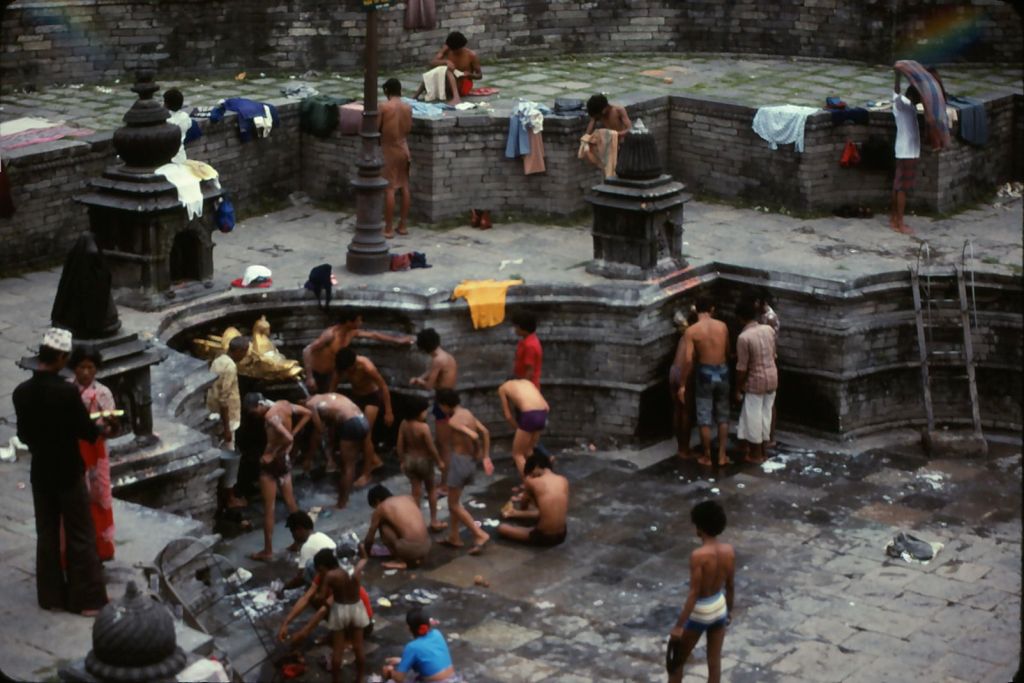

(Left) An open air, public shower and laundry for men. Where do the women shower? (Right) Pashupatinath: A body burns in the foreground while a woman washes clothes and children play a few meters downriver.
Pashupatinath, the Nepali equivalent of Varanasi in India, was an otherworldly place to visit. This, the main burning or cremation ghat of Kathmandu, used by both Hindus and Buddhists, was despite its somber, principle function and the fetid river it borders, a surprisingly lively place to visit. This relationship to the dead seems so much healthier than our sanitized, often remote, connection to the dead in North America.
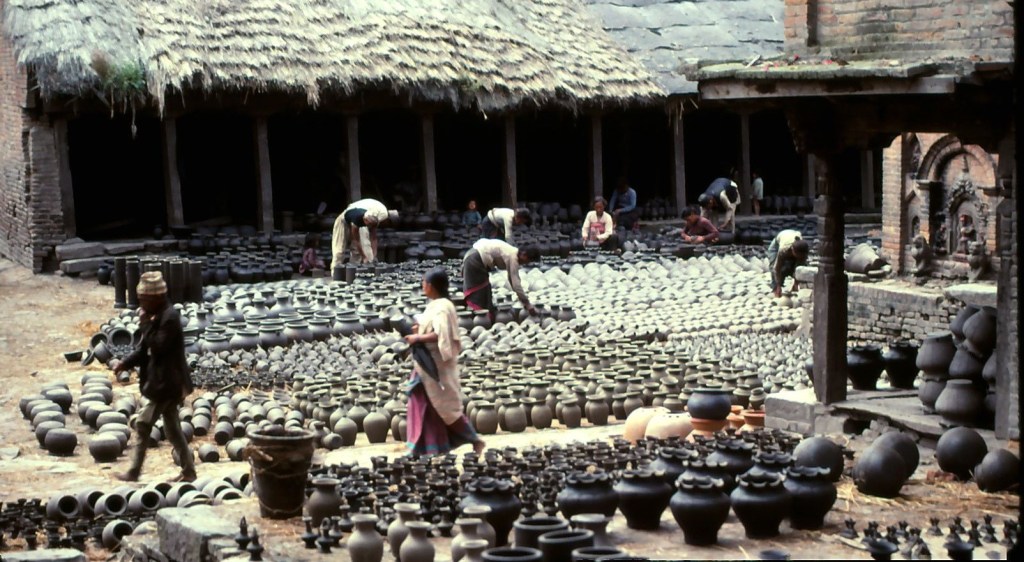
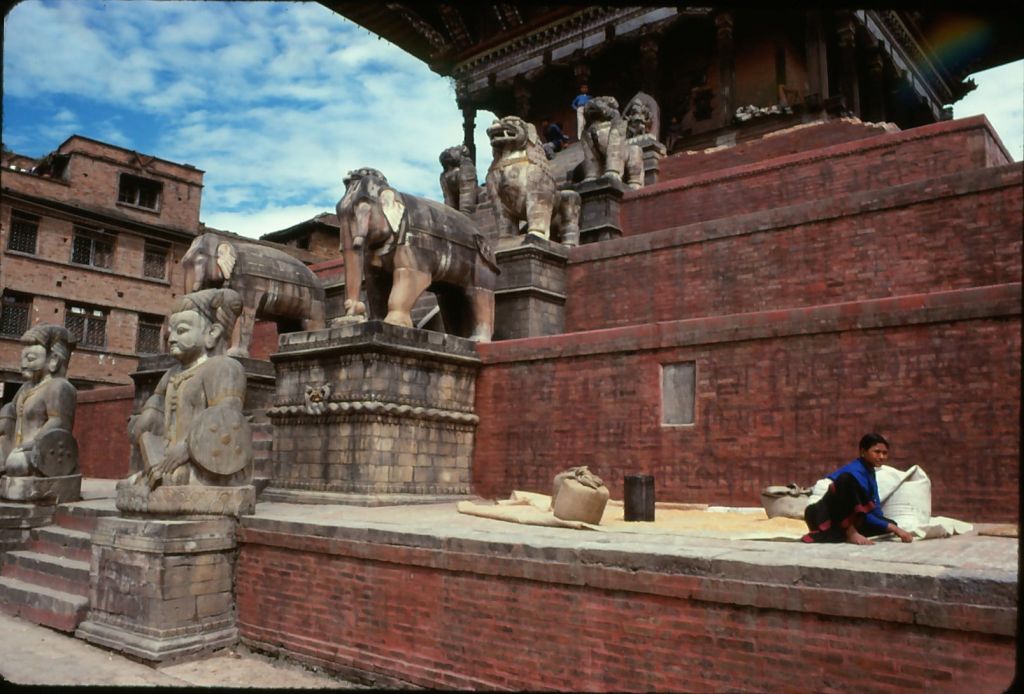
(Left) The Costco of earthenware pots. (Right) Each level represents an entity 10x stronger than the level below, starting with famous wrestlers and culminating with a Hindu God


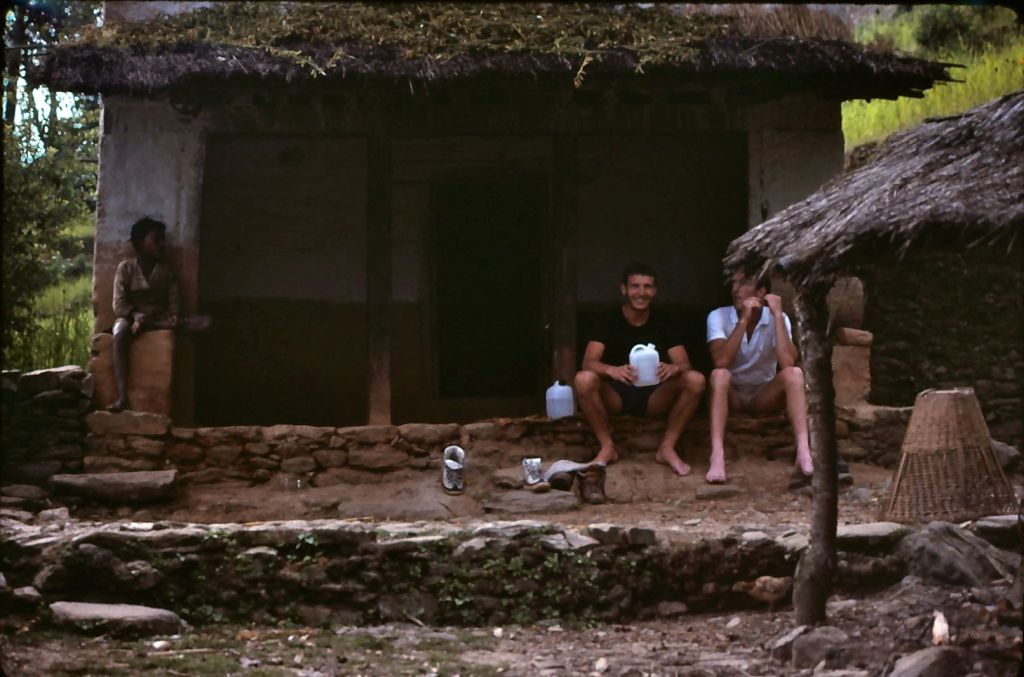
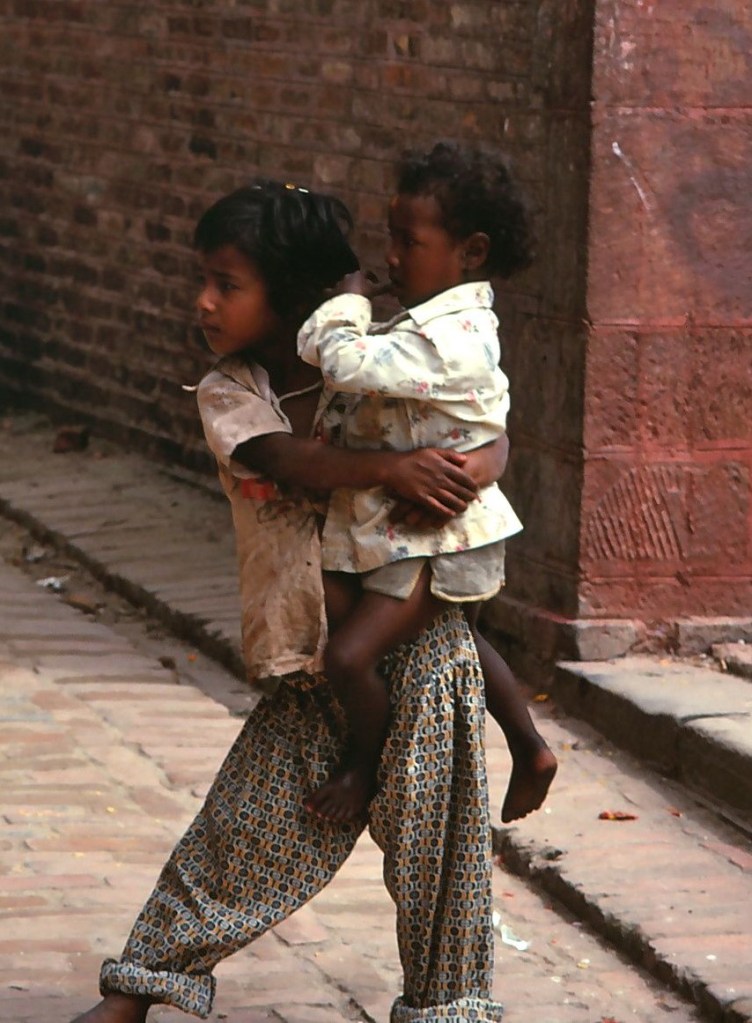
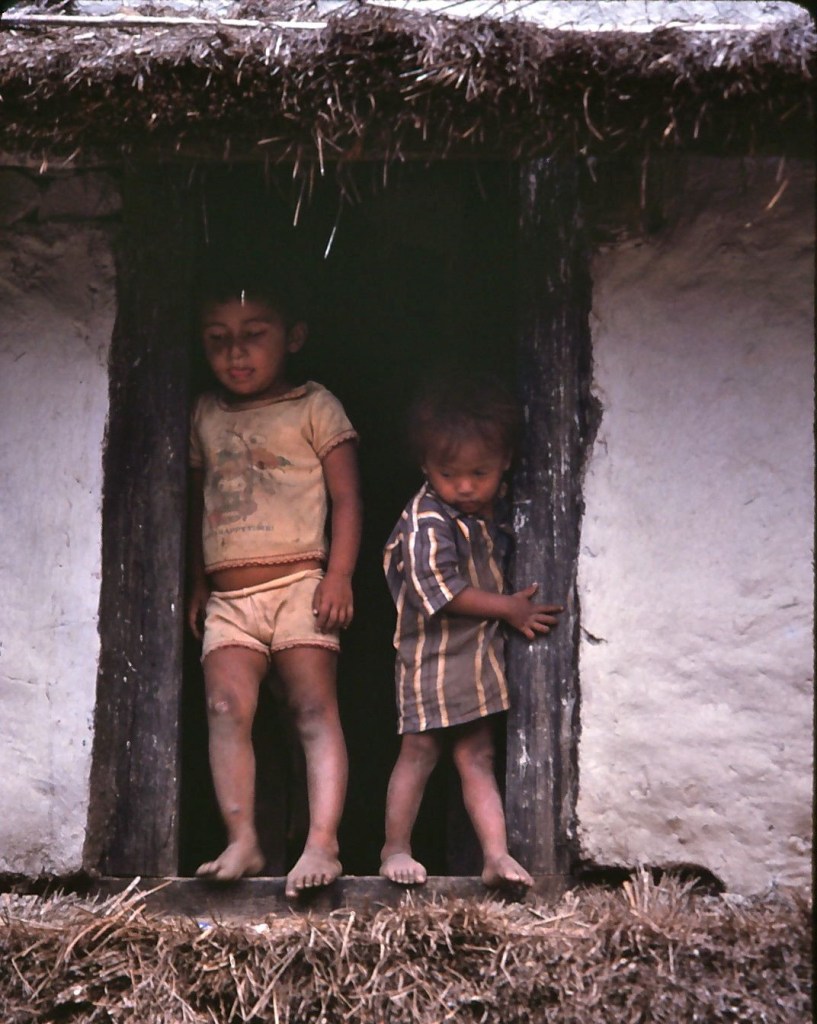
(Left) Girls become the care givers from such a young age! (Right) Looking down from a 2nd story window. No helicopter parenting here.
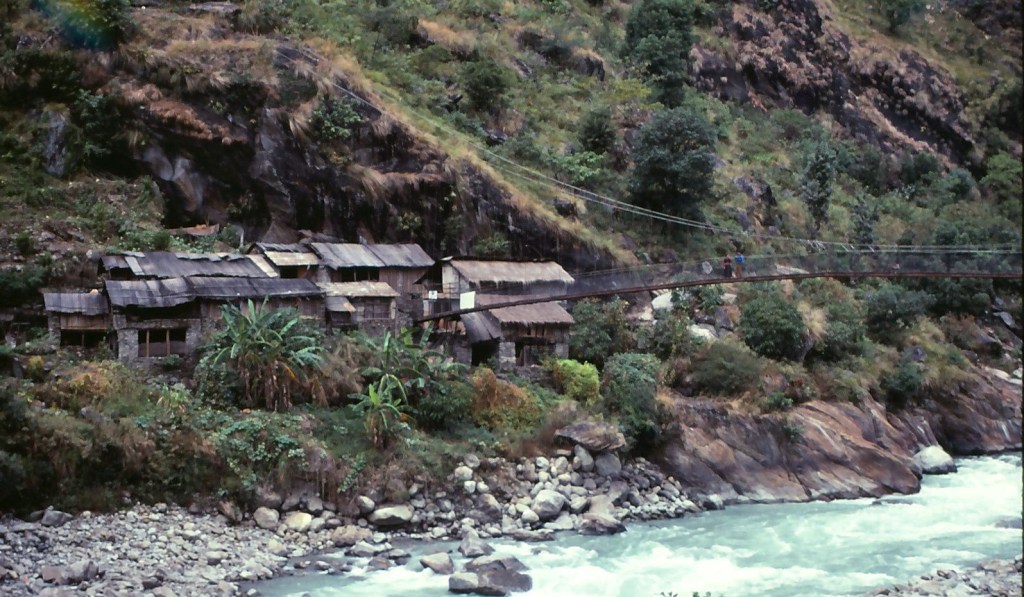


(Left) Locally built infrastructure – yikes! (Right) A Ferris wheel held together with the simplest but functional materials.
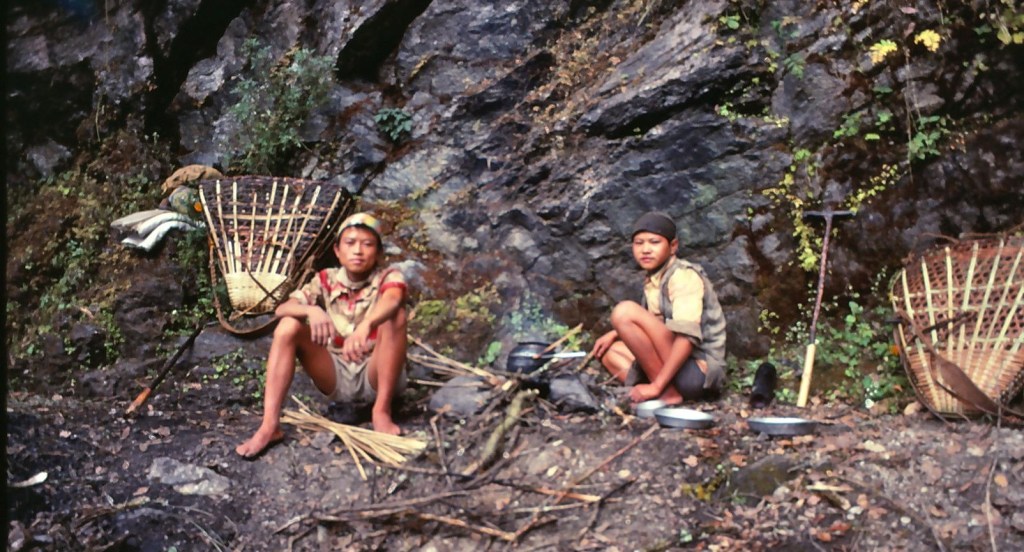

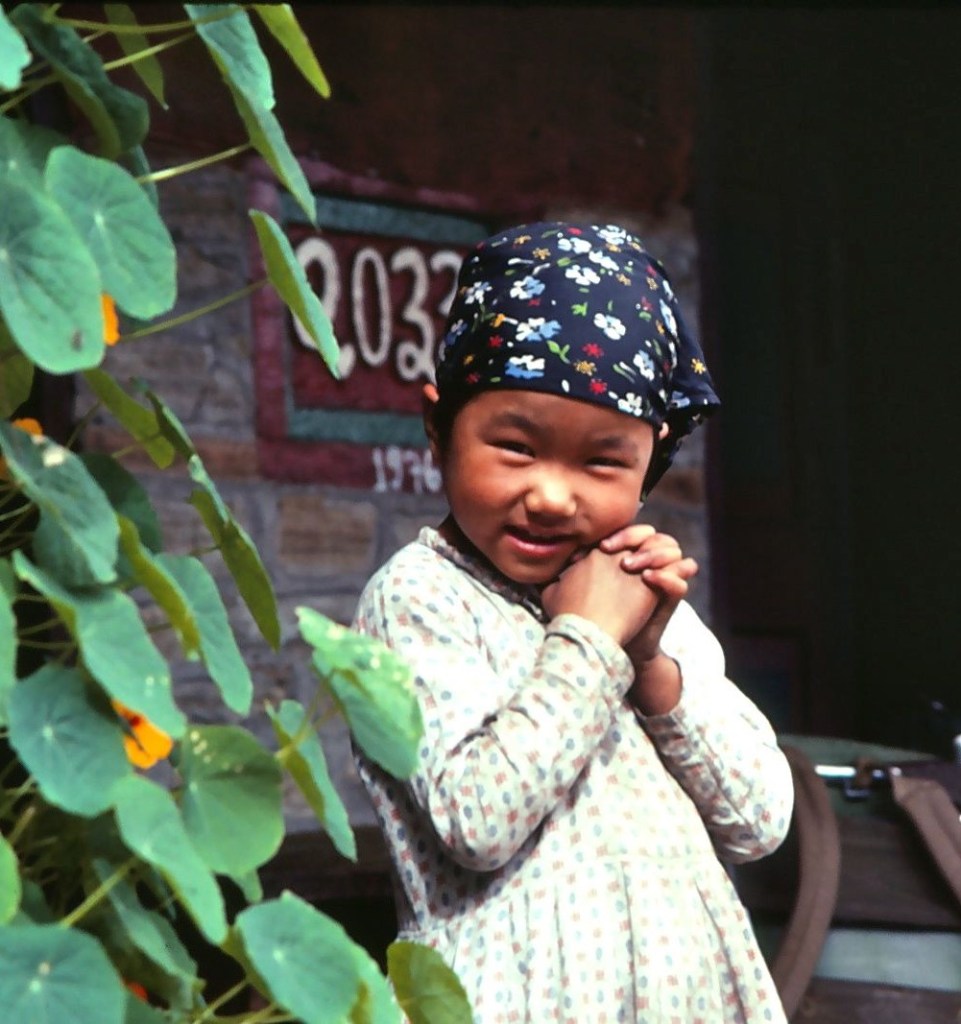

The Nepali children, as intrigued by us as we were of them.
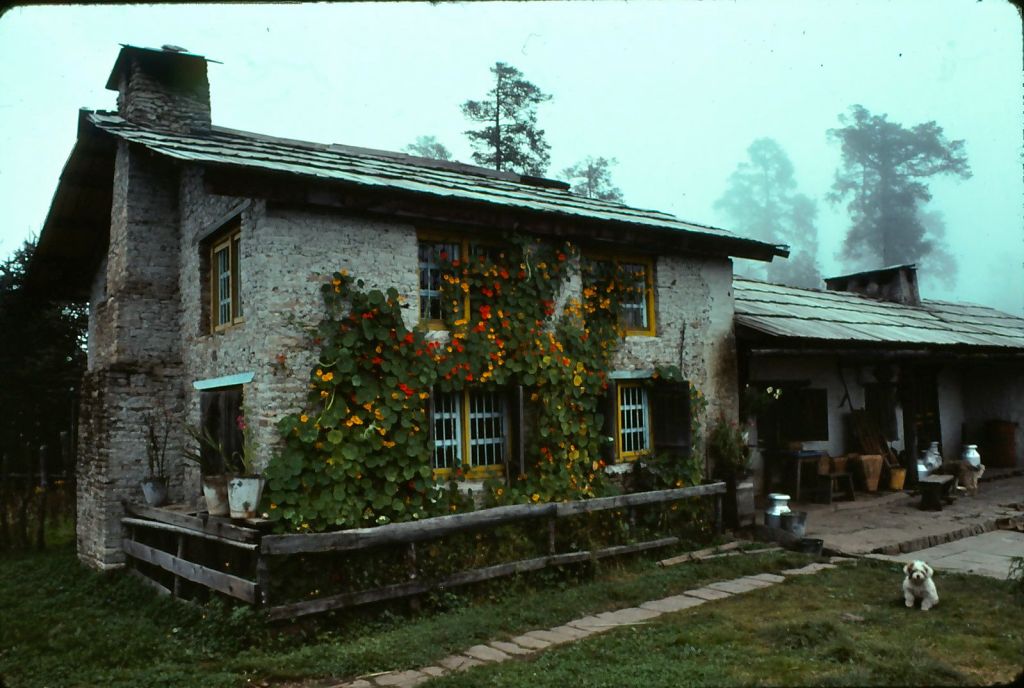


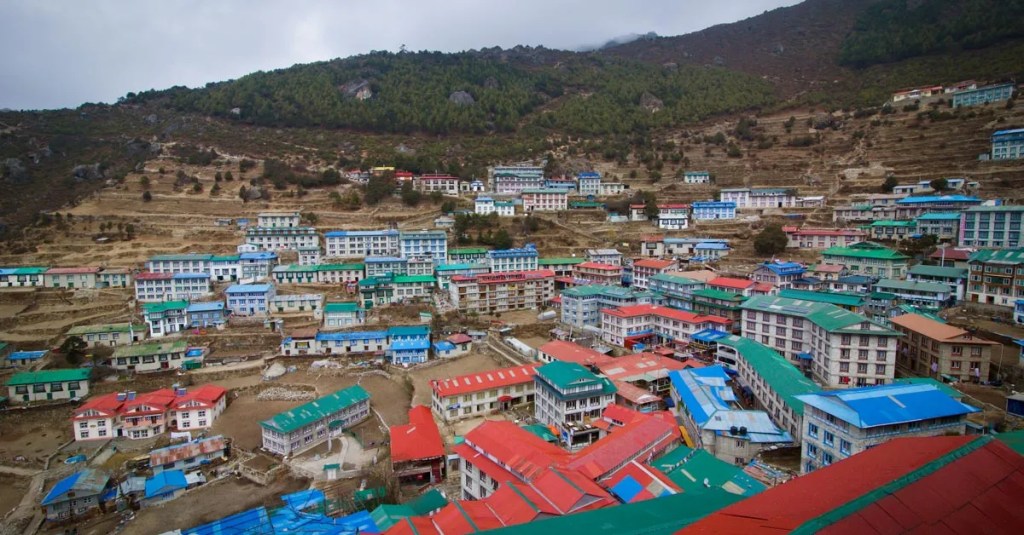
(Left) Namche Bazaar, circa 1980. (Right) Namche Bazaar, circa 2022
Namche is the heart of the Khumbu area of Solukhumbu District and traditionally home to the Sherpa ethnic group, though the Sherpa people can be found in many regions of the Himalaya. The above photos show the dramatic change of the past 40 years, most of which is driven by tourism, including of course all the climbing expeditions passing through town.
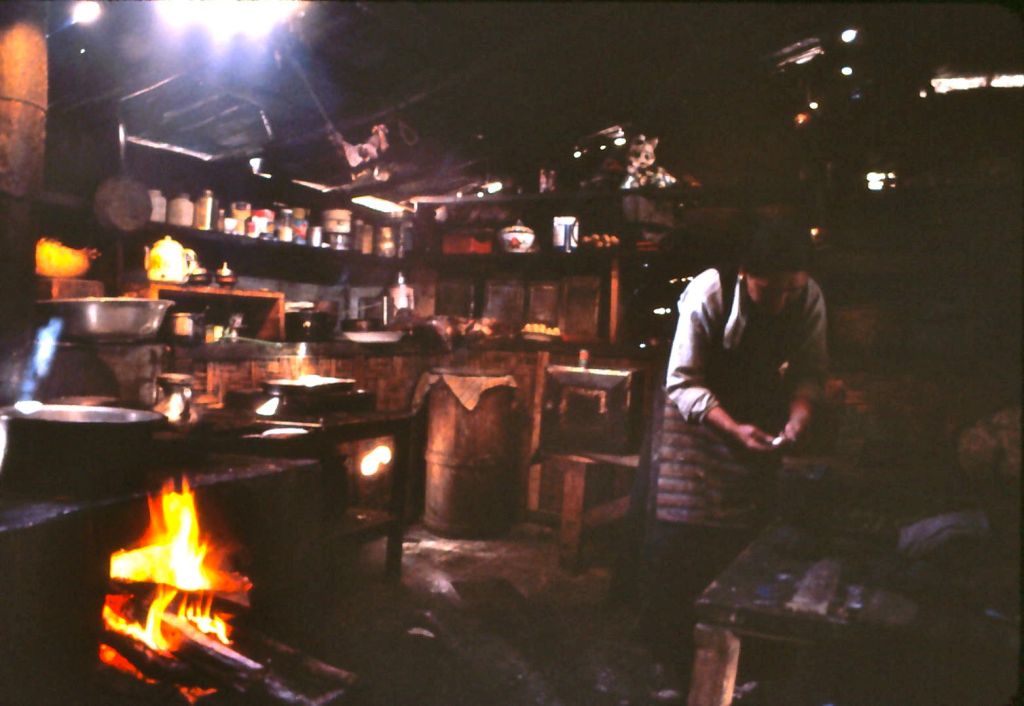

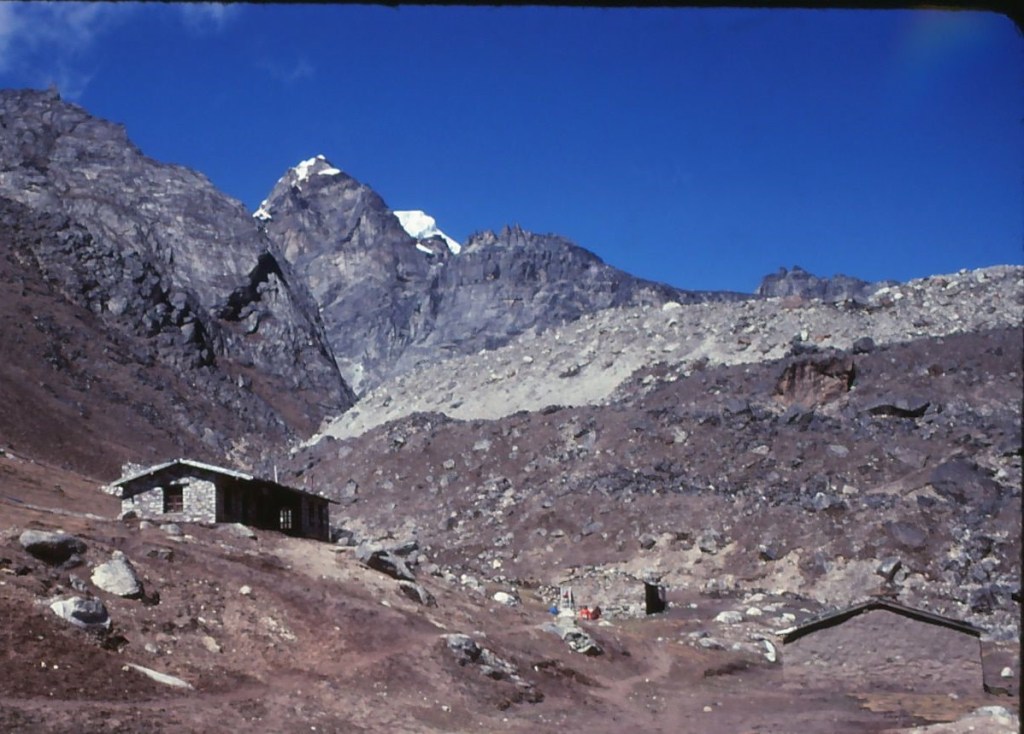
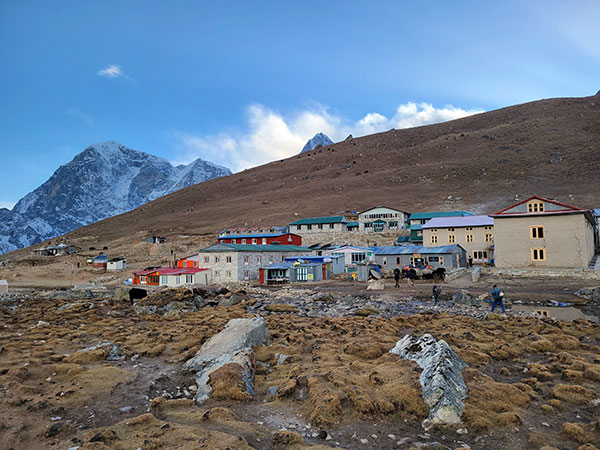
(Left) Lobuche, circa 1980. (Right) Lobuche, circa 2022.
Lobuche, the last ‘permanent’ settlement before Everest basecamp. In the hut on the hill we were served yak meat momos by the ‘didi’ (sister) of the famous Tenzing Norgay, the first person, along with Sir Edmund Hillary, to summit Everest. The momos were delicious!

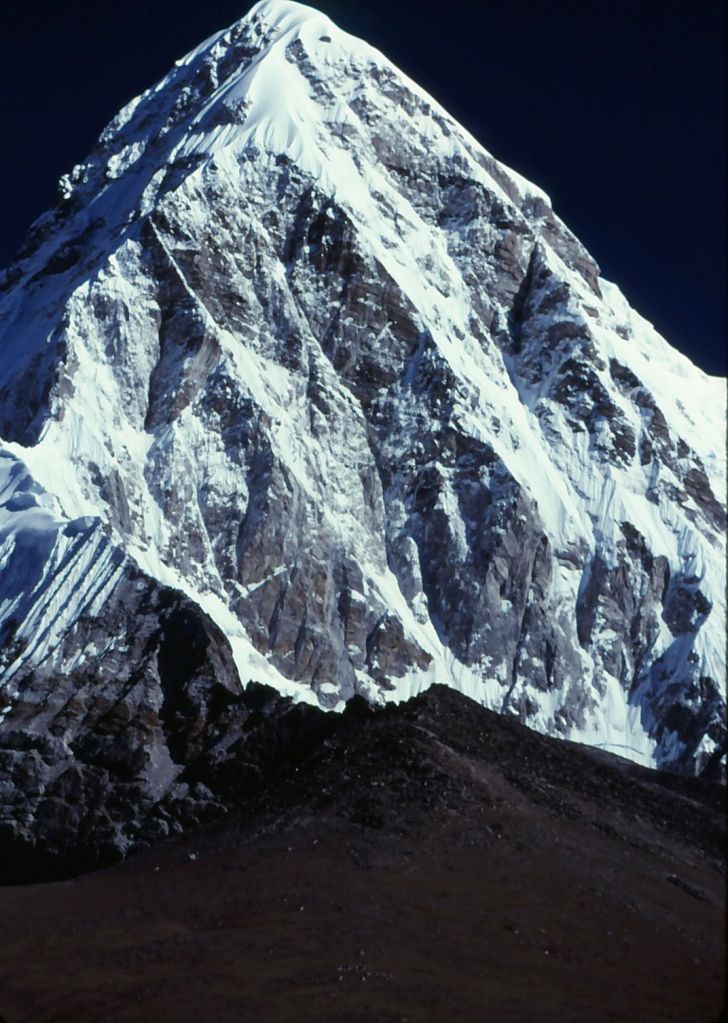
(Left) My hiking attire: Yak wool hat, old, 2nd hand down jacket purchased in Namche and white long johns. Everest base camp over my right shoulder. The infamous Khumbu Icefall just above my head. (Right) We climbed this! No, not Pumori in the background, the little black hill in front. Kala Patar is only 5,634 M (18,209′) but Steve didn’t make it. We left him lying at the foot of the hill, feeling sick from the altitude.
We felt no need to visit base camp proper, so we all headed back to Namche, where Steve and John continued down to Lukla and a flight back to Kathmandu. Andreas and I turned around and headed back up the adjacent Gokyo Valley. We spent two nights under a big erratic alongside a glacial morraine. During the day, Andreas attempted a small snow clad ‘peak’ ( a hill by local standards) for which he was better equipped (crampons and ice axe) while I did a fun, rocky scramble up an untrammeled side of Gokyo Ri, a now popular trekking summit.
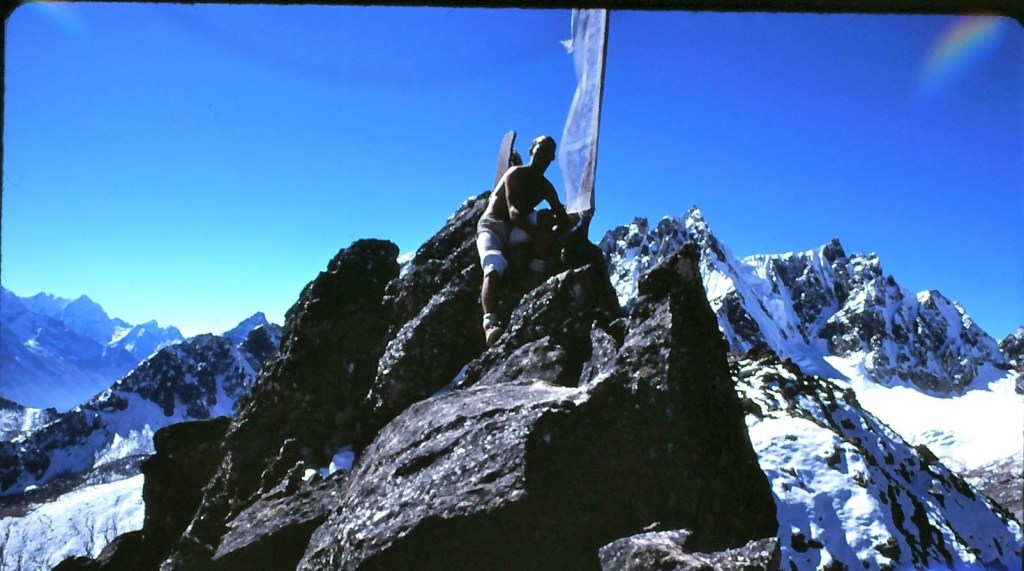
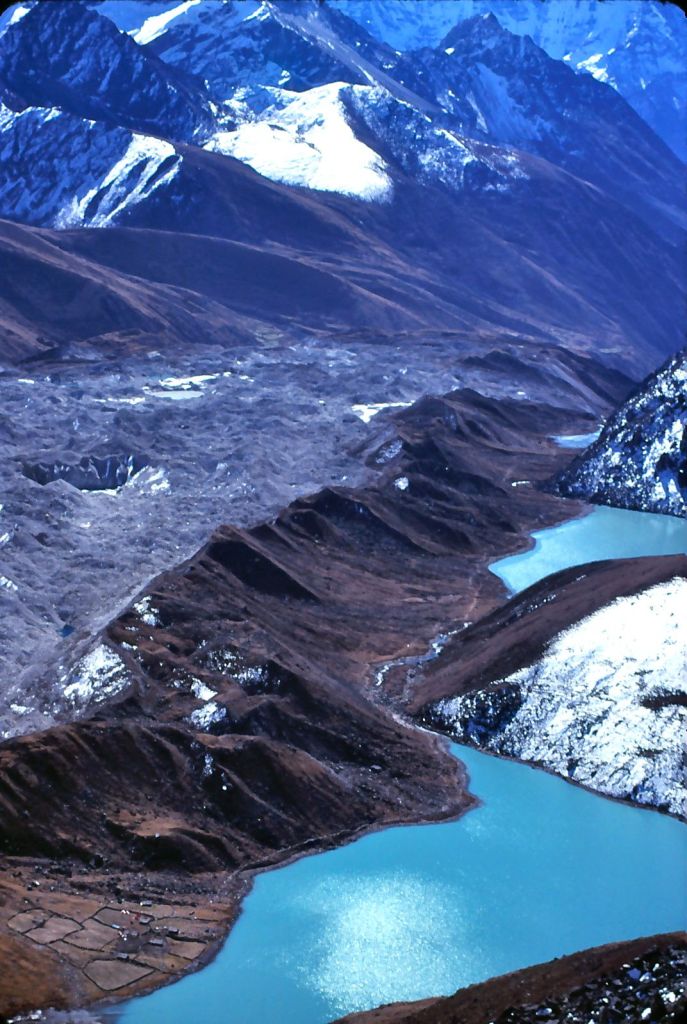
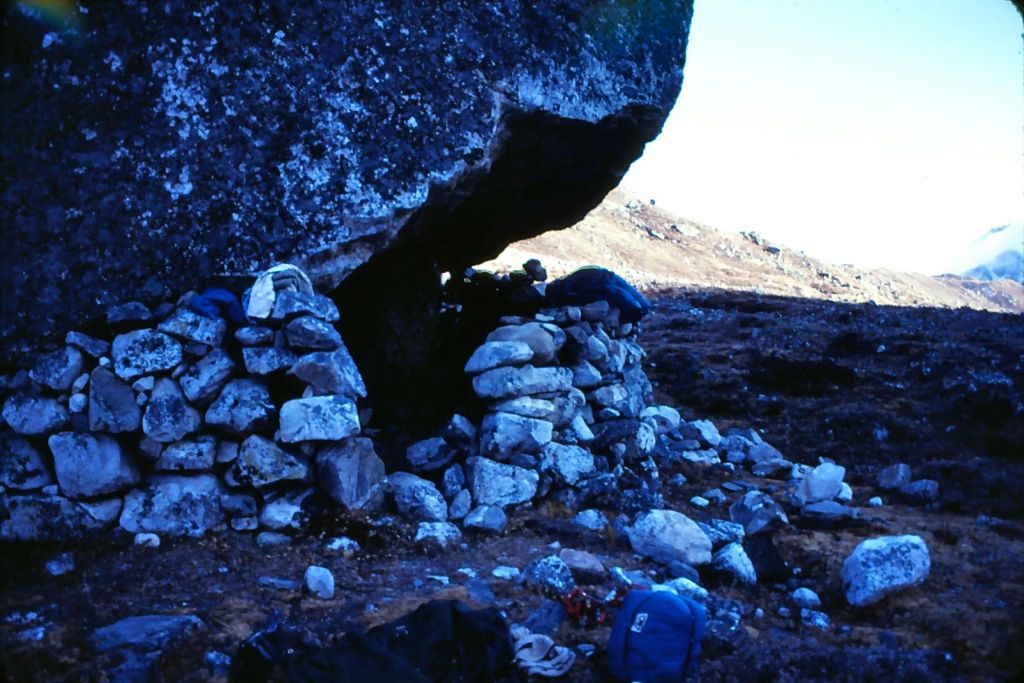
(Left) On top of Gokyo Ri. Alone and shirtless at the summit was a memorable experience! (Center) Looking down onto Gokyo Valley and the tail of the longest glacier in the Himalaya. The potential collapse of a giant meltwater lake (climate change) now forming on its surface threatens the communities below. (Right) Under a rock, our campsite for two nights.
Andreas and I returned to Namche then continued down to the airport at Lukla. The flight to Kathmandu was a sketchy affair. The plane, a twin engine Otter (common in the Himalaya in those days), powered down the steep, uneven, grassy runway and at the last minute became airborne as the ground fell away sharply to the Dudh Kosi (Milk River) far below. Our fully loaded plane had to circle around to gain enough elevation to clear the first pass. A few days of recuperation in Kathmandu, pigging out at the famous pie shops (a wonderful Nepali response to the munchie requirements of all those pot smoking hippies of the 70s), reconnecting with Steve and John and planning our next adventure. See our next post (coming soon). Nepal – Way Back When, Part 2: Manang Valley
 OVER THE HILL AND BEYOND
I’m tempted to say “too much info” Jimbo on the bowel movements and leech removal etc, but very graphic for sure! Photos are fantastic! Storytelling even better, including your claim to fame of being served up grub by Tenzing Norgay’s sister! 👍 And to think I had cred wagging tongue with Rocket Richard, Jean Beliveau and The Flower in my lifetime. I bow to the master! Rock on Jim Harvey. And kudos to the chicks doing the upcoming hike in Nepal. Bringing along their men-folk would only slow them down. 😜
Cheers,
#10
LikeLike
Too much info?? Talking about bowel movements amongst Third World travelers is like talking about the weather in Canada. 😉
Chatting with the 3 hockey greats is pretty high on the credibility scale Steve!
Good to see you at the garage sale.
LikeLike
Hi Jim & Claire
A Great blog on Nepal … vintage 1980. Your pictures & writings, so well documented, remind my of a trek I did with a Swiss buddy in 1970. Thank you for giving me a return visit. Cheers, Ken
LikeLike
Very glad to have provided the reliving of old memories Ken! It’s a special place.
All the best
LikeLike
That was the best post yet. I remember having similar bowel conversations with girls in India and my dad being shocked when I told him about it. And the leeches brought back ‘wonderful’ memories of how cool I was trekking in a sarong and the reason why I stopped doing that. What about your experiences with special cakes on Freak Street? Let’s hear about them. Have you tried to track down any of those people on FB? That would be amazing. I have so many questions – but I’d like to point out that after you were there the name was officially changed to Solukhumbug.
LikeLike
thanks Gary, I knew you would be able to relate. Regarding cakes on Freak Street, discretion is the better part of valour. I’m looking forward to Part 2, where my bowels determined the adventure. NB – currently at Skaha, wishing I had some upper body strength!
LikeLike