
After almost 5 weeks traversing Laos from north to south, we are in a better position to articulate the differences between the Vietnamese and Lao. With Cambodia, however we see a striking difference right from the outset. With our border hassles behind us, we started the 65 km leg to the first town of note, Stung Treng. As feared, the ‘paved’ road was primarily dirt and the dust was relentless. We arrived tired, dusty and, after that intro, concerned about the road ahead. In the past 65 km we didn’t see a single guesthouse, restaurant or village of any note. Maybe, we thought, it is just that lonely stretch of road to the border. The next day we did 85 km and once again, not a single guesthouse and just a few of the most basic restaurants. In Laos or Vietnam, we would have seen +/- 8 guesthouses and +/- 20 restaurants. Other than our concern about being stranded without a place to stay at the end of a long day, we struggle to understand this new social geography. For reasons unknown, it appears Cambodian society is more urbanized, which is counter intuitive because agriculture is the mainstay of their economy. The rural villages we saw were relatively few, small in size, poor and underdeveloped, at least in this stretch of the north we’ve traversed. As we left the Mekong valley, heading west, we saw many large farms, yet the only visible housing is small, humble, wood huts often without electricity, which are unlikely to be the homes of the farm owners.
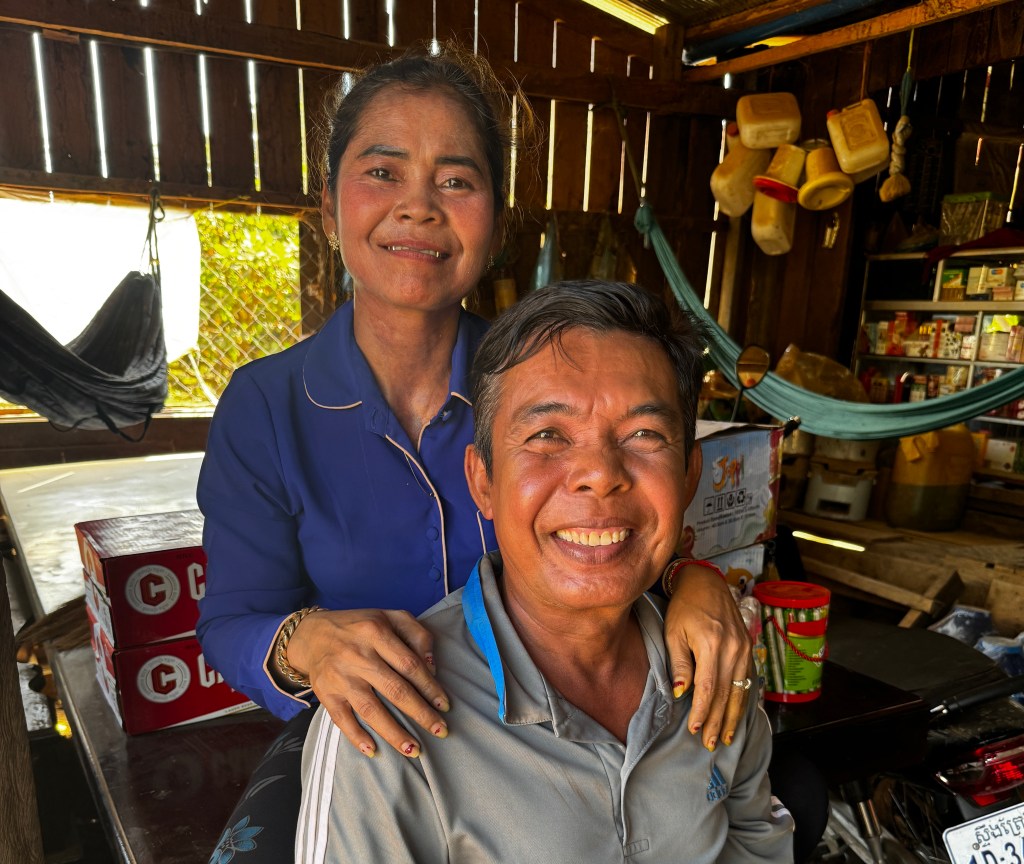
Cambodia is one of the poorer countries of Southeast Asia, more or less, on par with Laos and Myanmar. The economy is growing quickly what with low labour costs, a pro-business/investment climate and a reasonably ‘stable’ government, but endemic corruption and human rights issues may slow that growth. The country has been ruled by the same wily autocrat, Hun Sen, since 1985. He stepped down this year, but surprise-surprise, his son is now the Prime Minister. Though in theory, a constitutional monarchy, it has become a de facto, one-party state ruled by a dictator. Of course, none of the above has any bearing on our perceptions of the country nor is it necessarily a predictor of what the future holds.

Though we might be completely off the mark, we feel that Cambodia’s traumatic past has influenced many aspects of how the country is developing. Under the Khmer Rouge, Buddhism was severely repressed. Temples were destroyed, monks were forced to disrobe and dissent meant death. Though Buddhism is once again the official religion and, I believe, most Cambodians would call themselves Buddhist, the practice seems subdued in comparison with Laos. They estimate that only 10% of the artistic community survived the KR. Muslims were targeted as were both Vietnamese and Chinese Cambodians, plus intellectuals of any stripe. In general, we see less adherence to tradition and a rapidly modernizing society. In stark contrast to Vietnam and Laos, English is quite widely spoken. The US dollar and the Cambodian Riel are interchangeable. Chopsticks are being supplanted (???). Of course, EVERYONE is glued to their smartphone!
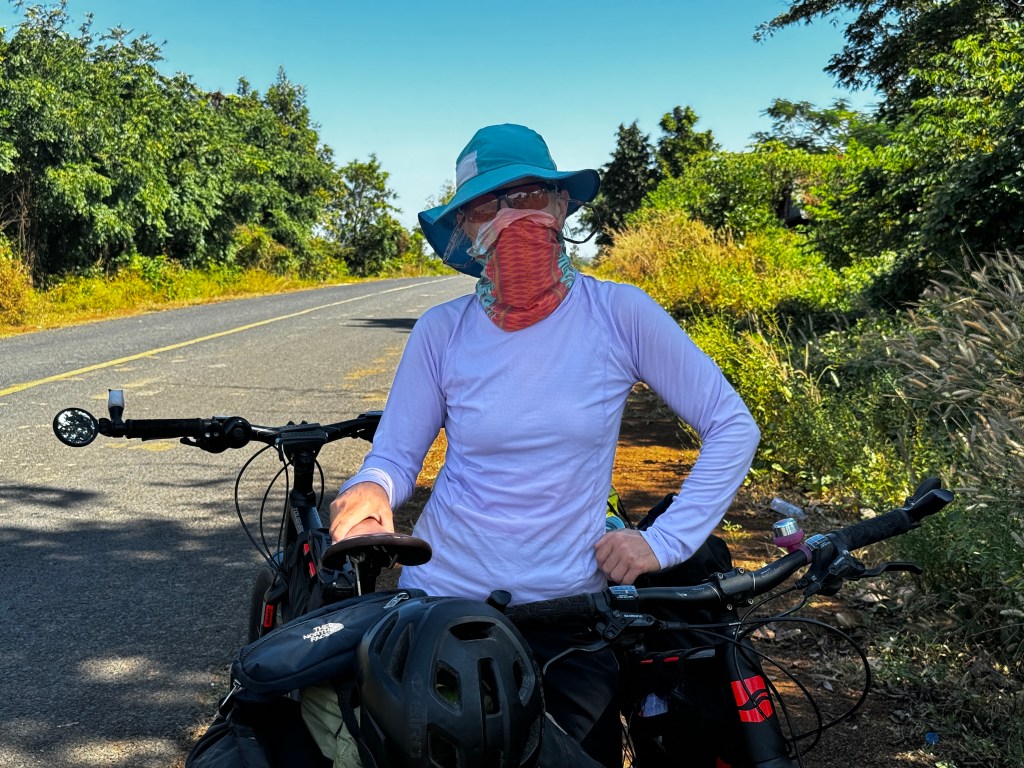
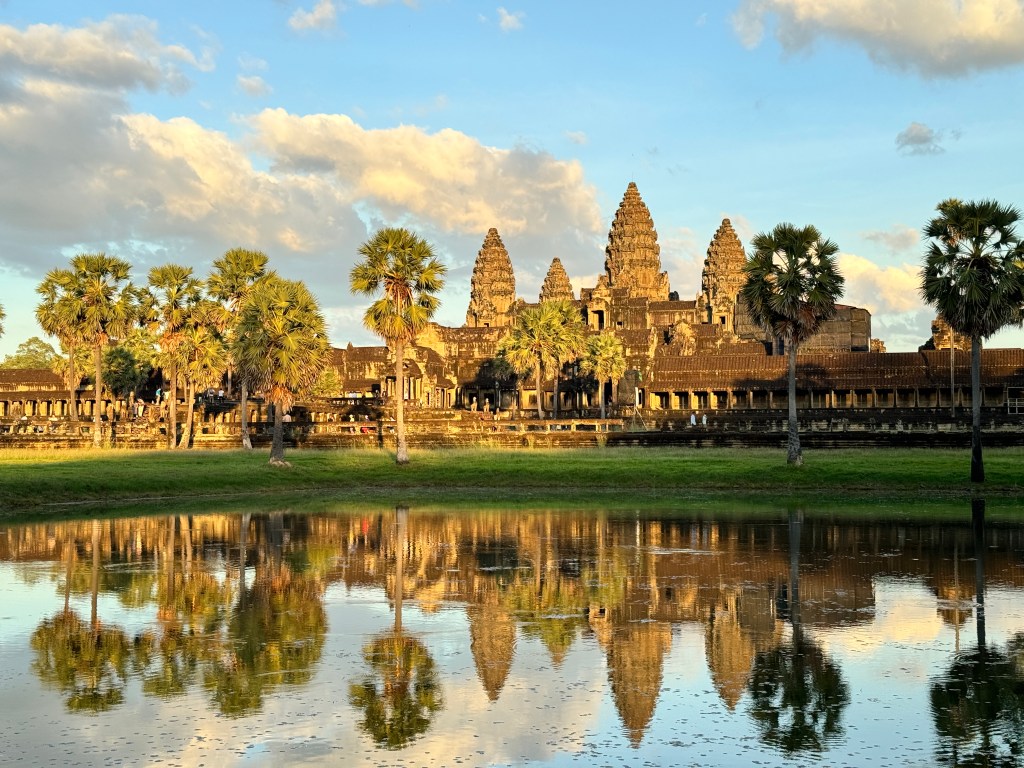
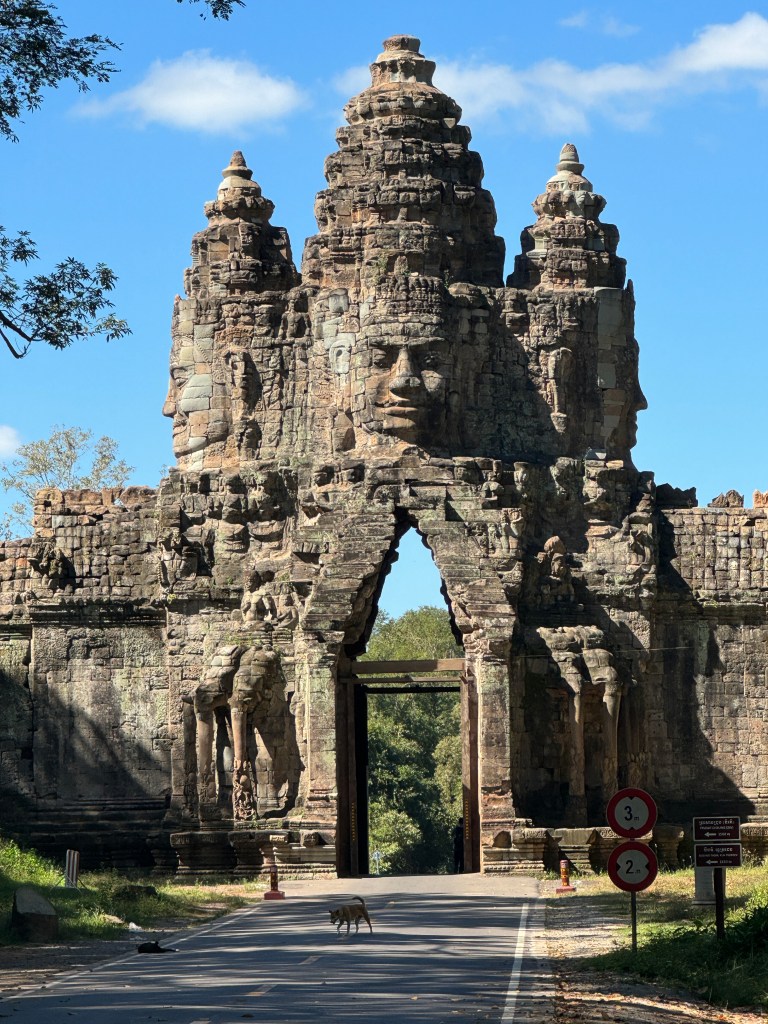
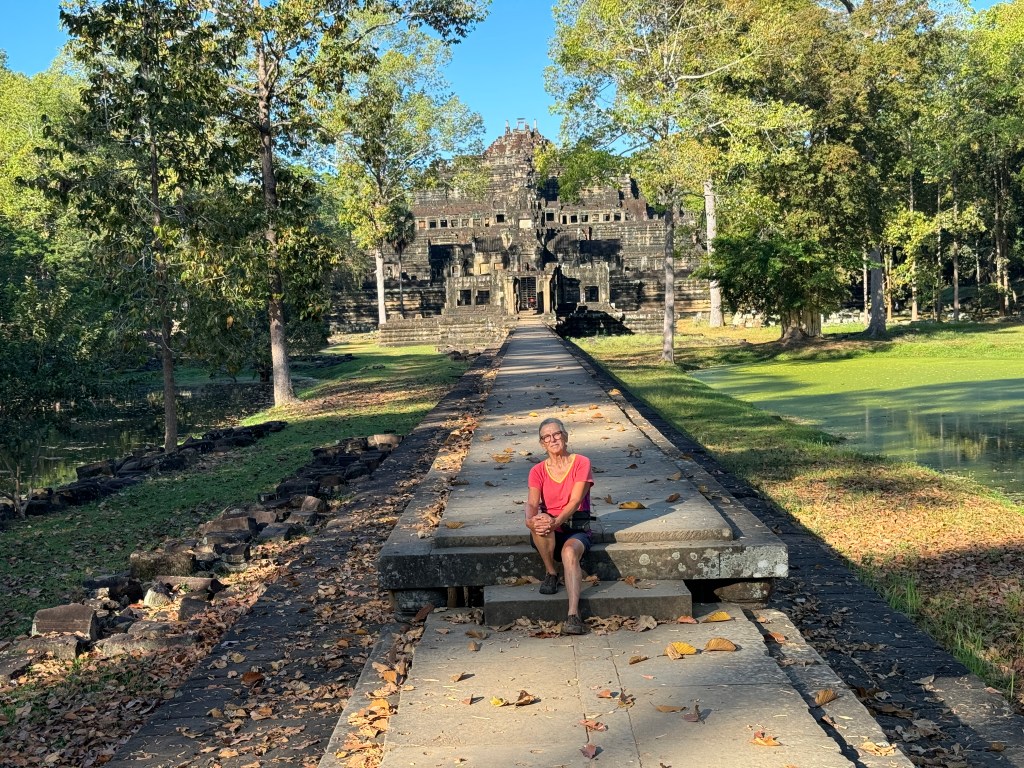
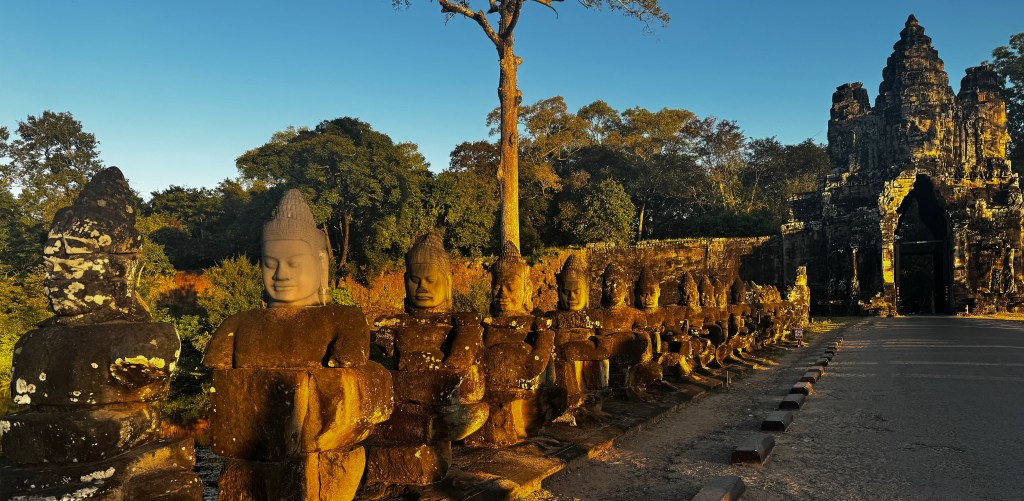
For various reasons, we decided to avoid Phnom Penh (the capital) and head west, directly to Siem Reap, home to the stunning Angkor ruins. Siem Reap, the 2nd largest city in the country, is a very pleasant tourist town filled with hostels to luxury hotels, restaurants galore, markets of every kind – everything a tired bike tourer needs. For four straight days, we rode our bikes out to visit some of the literally thousands of ruins within a 20 km radius of the city. Angkor is one of the Wonders of the Ancient World and truly breathtaking.
Angkor at its height was the most populous city in the world (+/- 1 million) and, in area, the largest pre-industrial metropolis on our planet, by quite a distance. It was the capital of the Khmer empire which dominated Southeast Asia from the 9th to 16th centuries. The temples were originally built to venerate the Hindu God Shiva, a couple of centuries later, to Vishnu and in the 13th century, converted to the worship of Buddha, with all the attendant changes and desecrations along the way. With the collapse of the Khmer empire came the vandalism of conquerors and finally, the more modern era of looting (and the filling of museums around the world). By the time archeological work to restore the temples was begun in the early 1900s, the site was covered in jungle. Only the temples (and perimeter walls, moat linings, triumphal walks, etc.) were built of stone or brick. All secular structures including palaces were built of wood and have long since disappeared. Almost all that’s known of Angkor’s history is what the ruins reveal. At one of the major sites, archaeological work had meticulously taken apart a tumbled down temple, making detailed drawings as they went. The drawings were destroyed during the reign of the Khmer Rouge and thus began the most complicated 3D jigsaw puzzle imaginable (300,000 pieces) as they tried to put it back together!
And yet, I can’t help but think that when it all comes down to it, these buildings are nothing more than a testament to the monumental ego of some megalomaniacal ‘God-King’ intent on impressing the masses. The temples were the sole preserve of an elite few and yet enormous human and material resources were utilized in their creation…….what social good was achieved in their creation? Sure, a simplistic, modernist and secular viewpoint……..easily debunked, I’m sure.
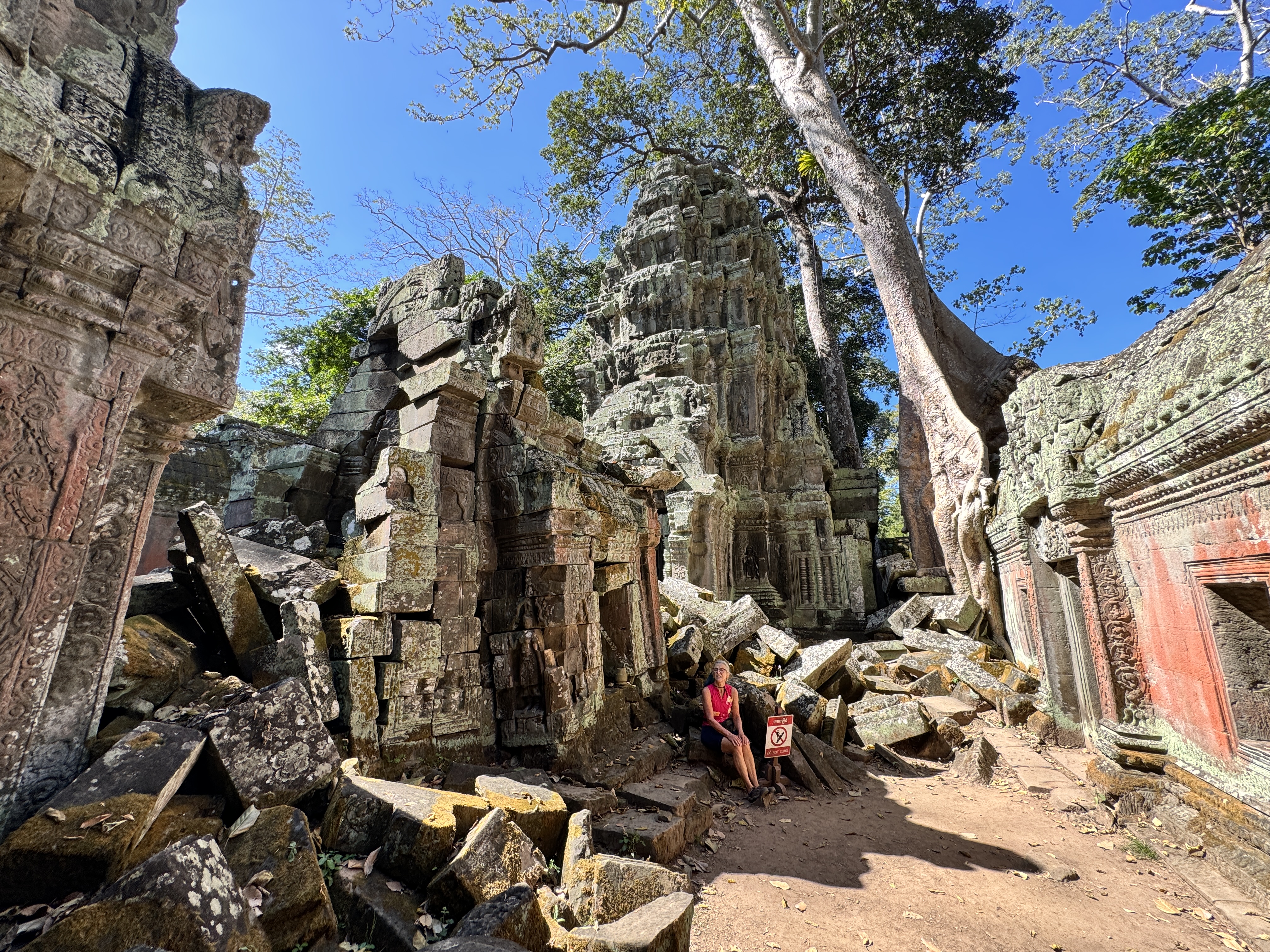

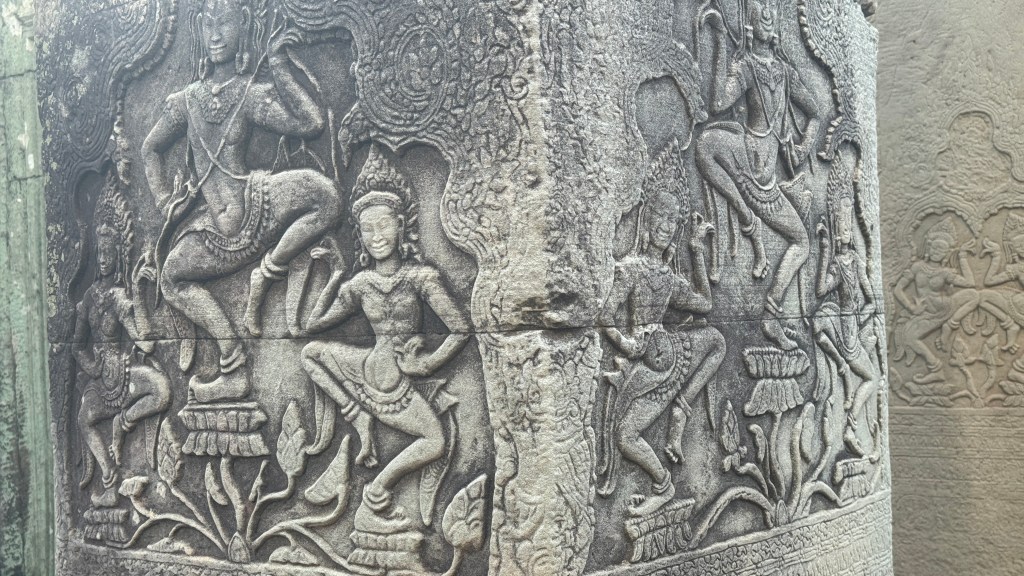
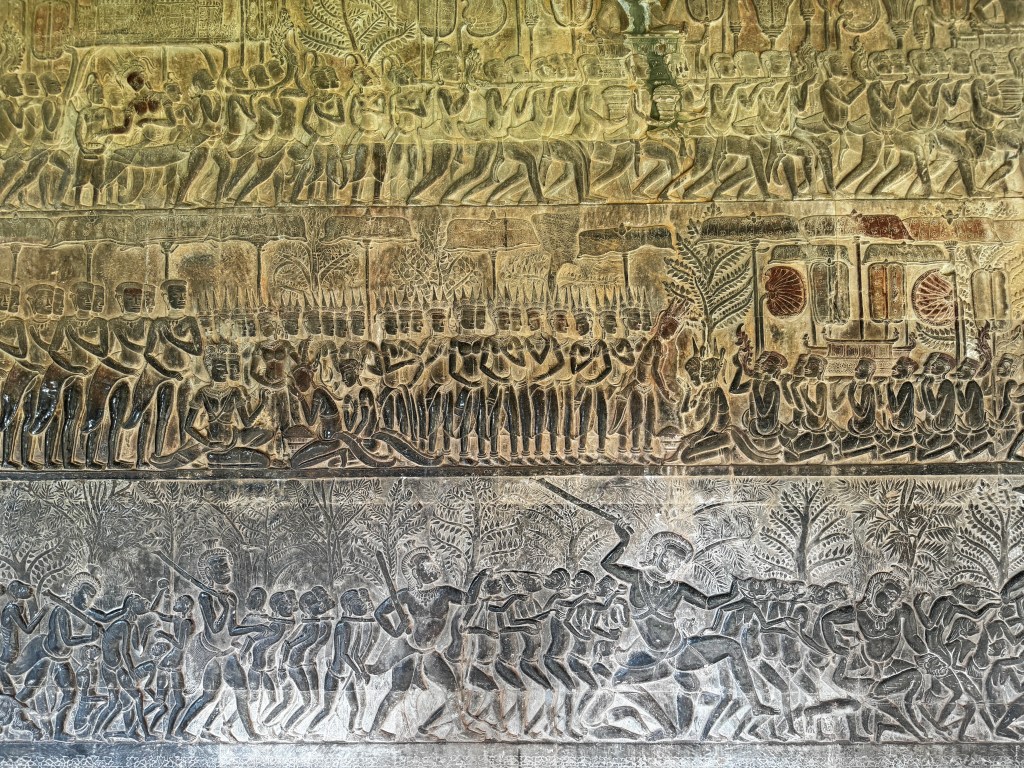
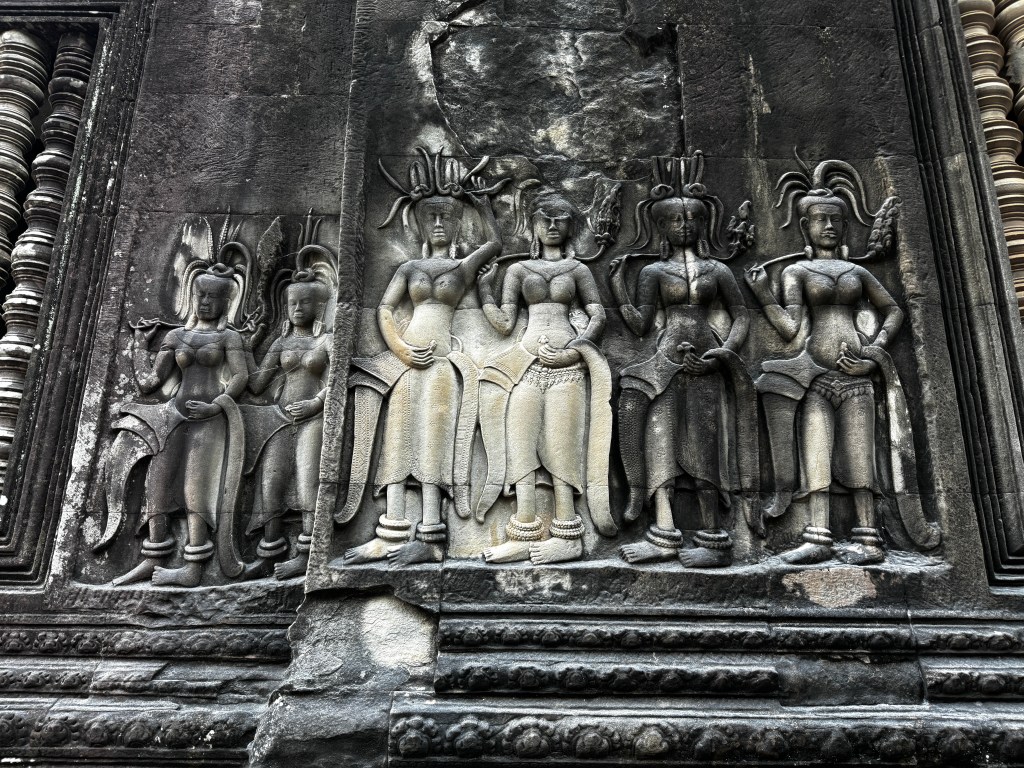
The images below are examples of the highly detailed, bas-relief sculptures that, at one time, literally covered the walls of most of the temples. Only a small fraction remain but still, a wonder to behold.

Red Cross where she worked in the sprawling refugee camps that had formed on the Thai-Cambodian border. The refugees were fleeing both the genocidal actions of the Khmer Rouge under the brutal leadership of Pol Pot but also the advancing Vietnam Army that was on the cusp of ousting the KR. It was a horrific time (estimates of 2 million people died during the 4 year reign of the KR as a result of starvation, war and outright murder) and as the refugees fled westward, the Thai Army brutally prevented any refugees from entering Thailand. Claire did two, three month postings and worked in different camps. The first posting was in Non Chang where she did public health outreach in the camp (vaccinations, sanitation and monitoring under-5 year olds) and the second, much larger camp of Khao-I-Dang where she worked in the Post-Op tent, attending to primarily victims of land mines. In both instances, Claire worked closely with and trained Cambodian personnel (all refugees). N.B. – One of these days we will tell the tale of Claire’s work in Cambodia and Djibouti.
Andrew was a 15 year old boy when he fled the KR with his family and ended up in Khao-I-Dang. Many of his extended family died at the hands of the KR but Andrew eventually made it to the United States where he built a life for himself and family (we also met his lovely Malay wife). In the intervening 40 years, Andrew has returned to Cambodia only once for his Mother’s funeral and this, his second time, was his first true vacation in the country of his birth. He was obviously emotional as he told his tale and it’s evident he still carry’s with him the trauma from that time. For Claire, returning to Cambodia for the first time after 43 years and meeting Andrew brought back a lot of vivid memories. She was as equally moved at meeting Andrew as he was of her.
The images below show the level of detailing on some raised walkways. The size, depth and quality of these bas-reliefs was outstanding. The handrails were typically a long serpent with a 7-headed naga at the ends.

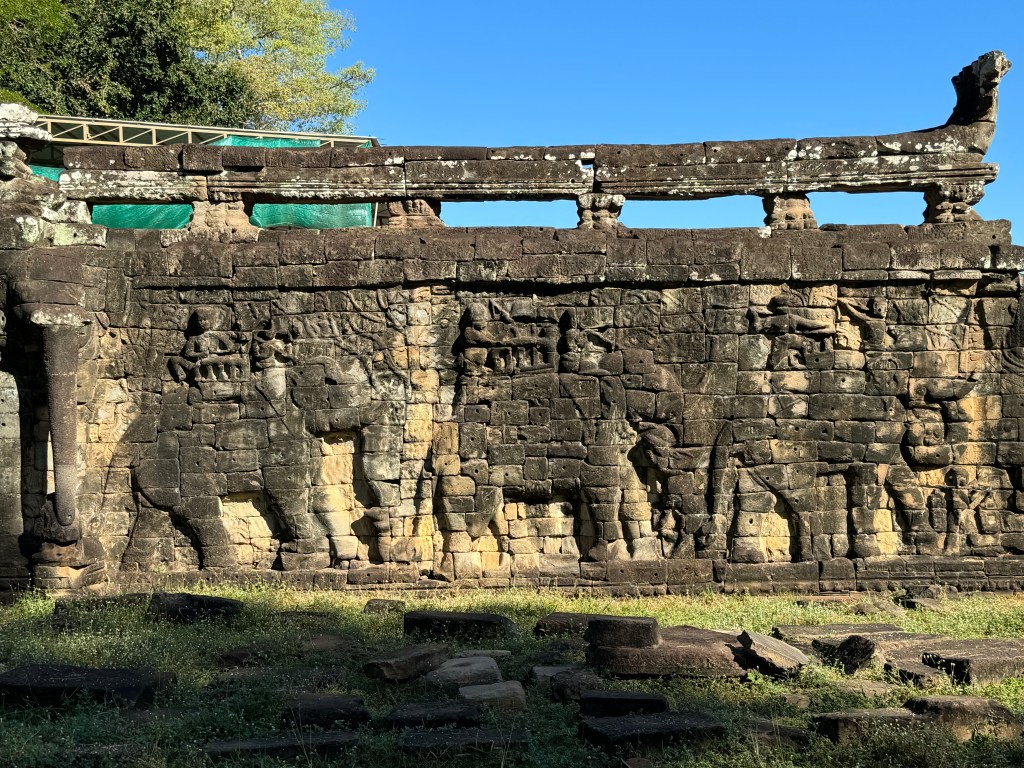

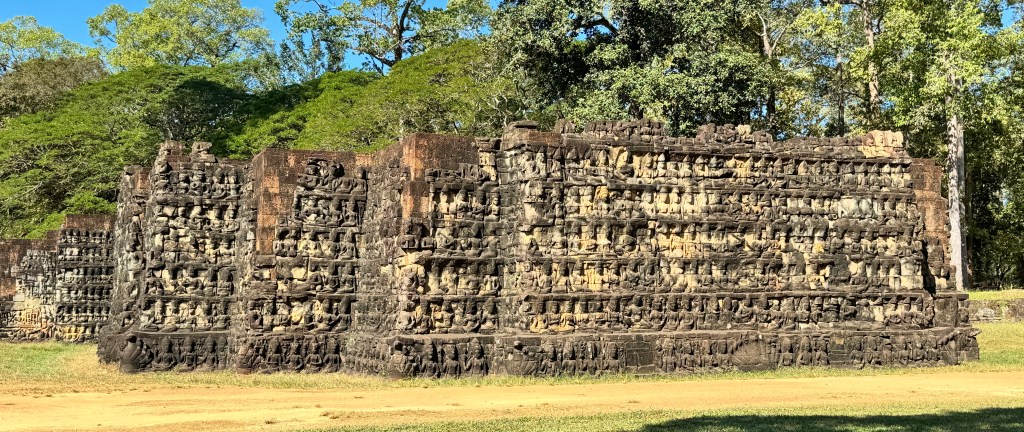
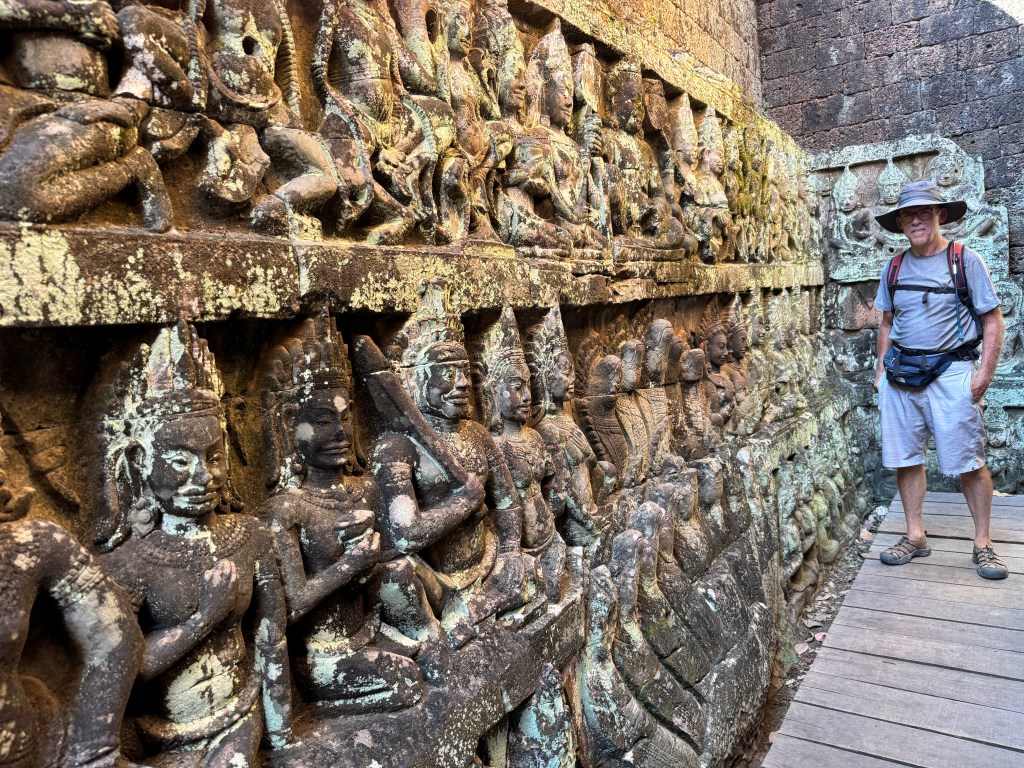
The above images are the walls forming the inside and outside of a parallel walled, maze-like structure. The walls were only 1 m apart and maybe 60 m in total length. The carvings were intricate, unique, in remarkable condition and told a complex story. The why and wherefore of this was beyond us and the Internet isn’t helping. Doing the guided tour thing just isn’t our style. We prefer absorbing the experience on our own time and inclination, but the downside is we leave with many unanswered questions.
As I review our pictures of Angkor, I regret they don’t convey adequately the grandeur of the place. I guess you’ll just have to go yourselves. From Siem Reap we decided to head to Battambang, the 3rd largest city and famous as the center of rice production for the country. We also opted to go by boat to get a feel for Tonle Sap and it’s many floating villages. The Tonle Sap is the largest lake in Southeast Asia and more than quadruples in size each rainy season, flooding a vast area. It is considered one of the most productive and diverse ecosystems in the world – sounds like it’s worth a look see! We got an early start and pedalled the 13 km to the wharf, found our boat, got our bikes on the roof, then chose optimal seats as far from the engine as possible. Before long the other passengers, maybe 20 or so, French and German tourists, piled in and we headed off.
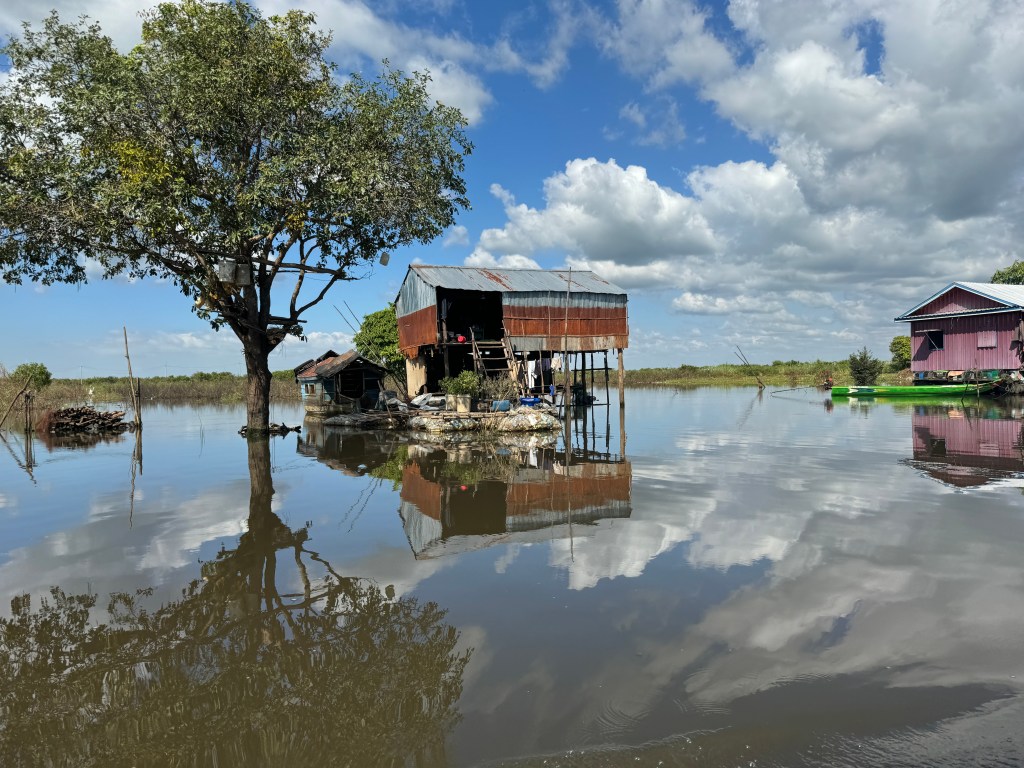
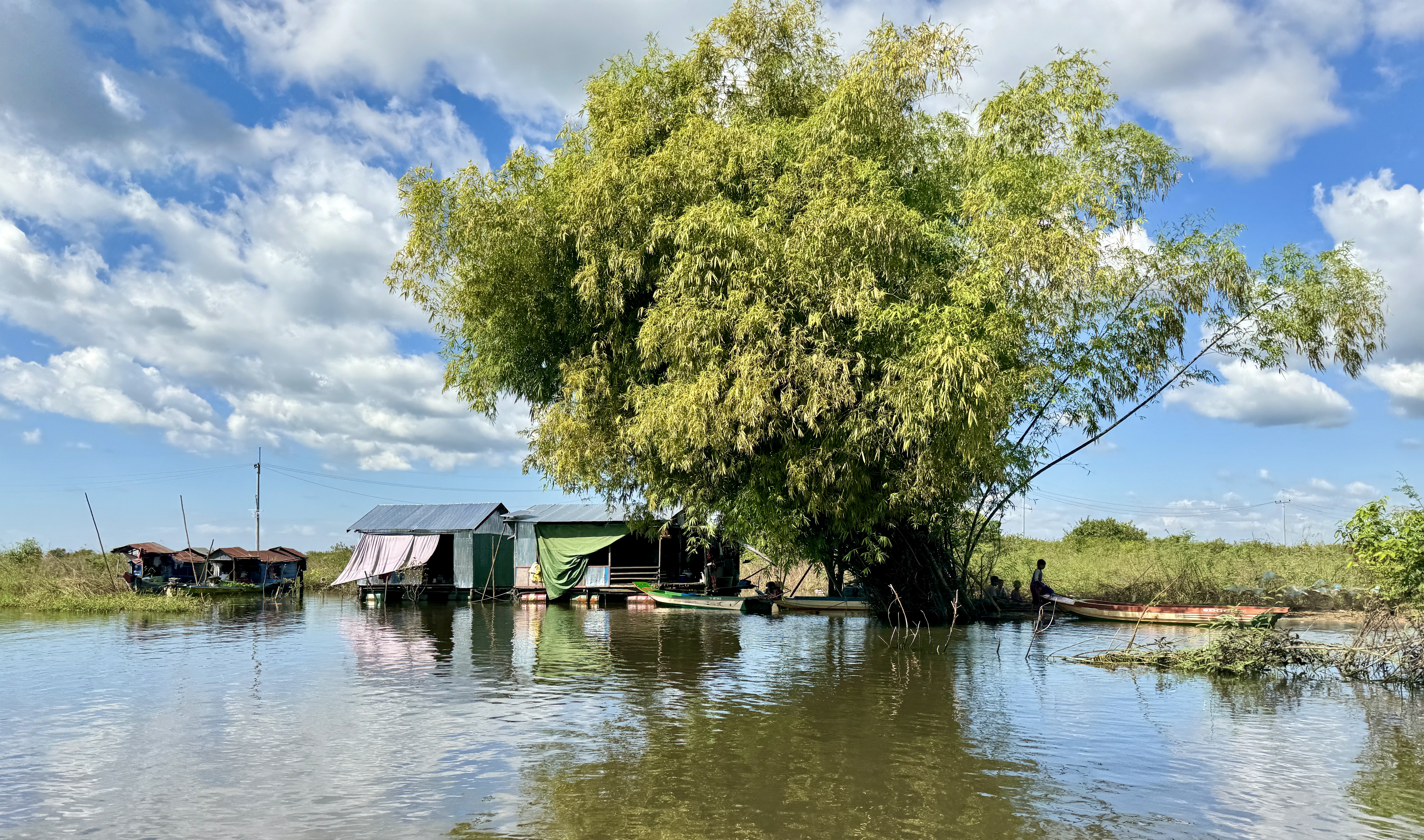
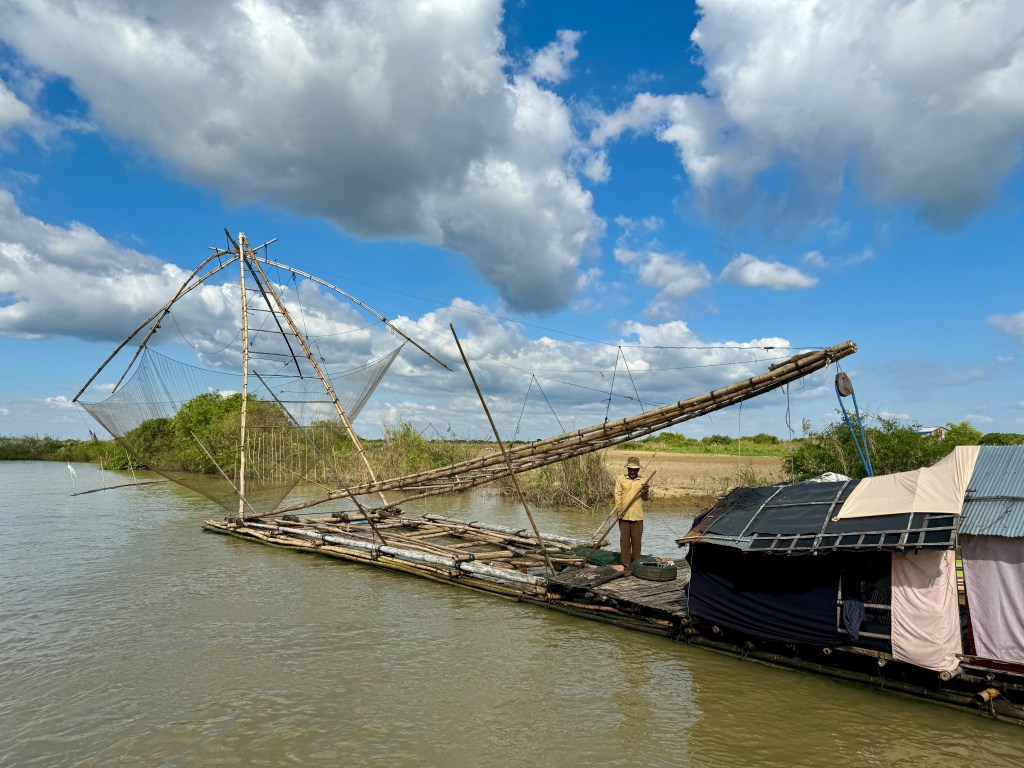
The Angkor ‘Express’ was anything but. We first headed down a channel, then across the north end of the lake (avg. dry season depth = 1 m) and then followed the Sangker River to within 12 km of Battambang. The trip (+/- 100 km) was a looonnng 9 hrs on hard bench seats, 3 hrs would have been enough, but we still enjoyed the experience. Mind you, there were a few grumpy looking tourists by the end. The floating villages were great to see and occasionally stop at to pick up some local cargo (eg. sacks of dried fish). At one planned lunch stop, I jumped in for a quick swim, I think to the astonishment of my fellow passengers justifiably concerned about local sanitation practices. I grew up swimming in ‘Pooey Louie’, so looked fine to me. The towns were a good size and evoked an income level typical of the local farming communities but there was also lots of poverty evident on the peripheries. Clearly, fishing was the mainstay of the riverine economy.
This post is now far too long, but just one last story. We cross into Thailand tomorrow and will hopefully post this tonight. On our way towards the border, we decided to do the steep climb (+15%) up a hill to visit a Buddhist temple and a Khmer Rouge ‘killing field’ site. The climb was brutal but reasonably short. Near to what is referred to as the ‘killing cave’, there was a small shrine and the usual collection of vendors getting ready for the day ahead. A young man, unasked, acted as our guide. He took us past some crude but grim statues depicting KR torture/killing techniques, then to the mouth of a vertical cave shaft where they threw their, still living, victims. We then walked down an adjacent cave, where an old man (monk?) sought alms in front of another Buddha beside an alcove full of bones and skulls. Our guide told us that at least 3000 people were murdered at this one site alone. We continued a short distance lower into the cave but the warm, humid air and the macabre thoughts running through our heads made it all quite uncomfortable. We left and pedalled the last punchy climb to the main temple site at the top of the hill. It was still early in the morning so it was just us and the local denizens of the place.
It was the usual overwrought, architectural mish-mash, Buddhist temple complex with the typical complement of modest, open air restaurants, souvenir stalls and stalls selling the standard ‘offerings, the devoted leave, all at the periphery of the temple, much of it in a sad need of maintenance . Most were closed but one vendor, who spoke good English wanted to engage us. He turned out to be a xenophobic nationalist, with intense political views who tried to convince us that Pol Pot was actually good for his country, and this tirade was delivered 300 m from a cave where Pol Pot’s followers killed thousands of innocents! His well rehearsed justification was hard to follow but such views are anathema to everything we thought we knew about the country. I subsequently reread the Wikipedia piece on the convoluted war, peace process and political machinations of the past 40 years. One can only hope there are not many Cambodians with his twisted logic.
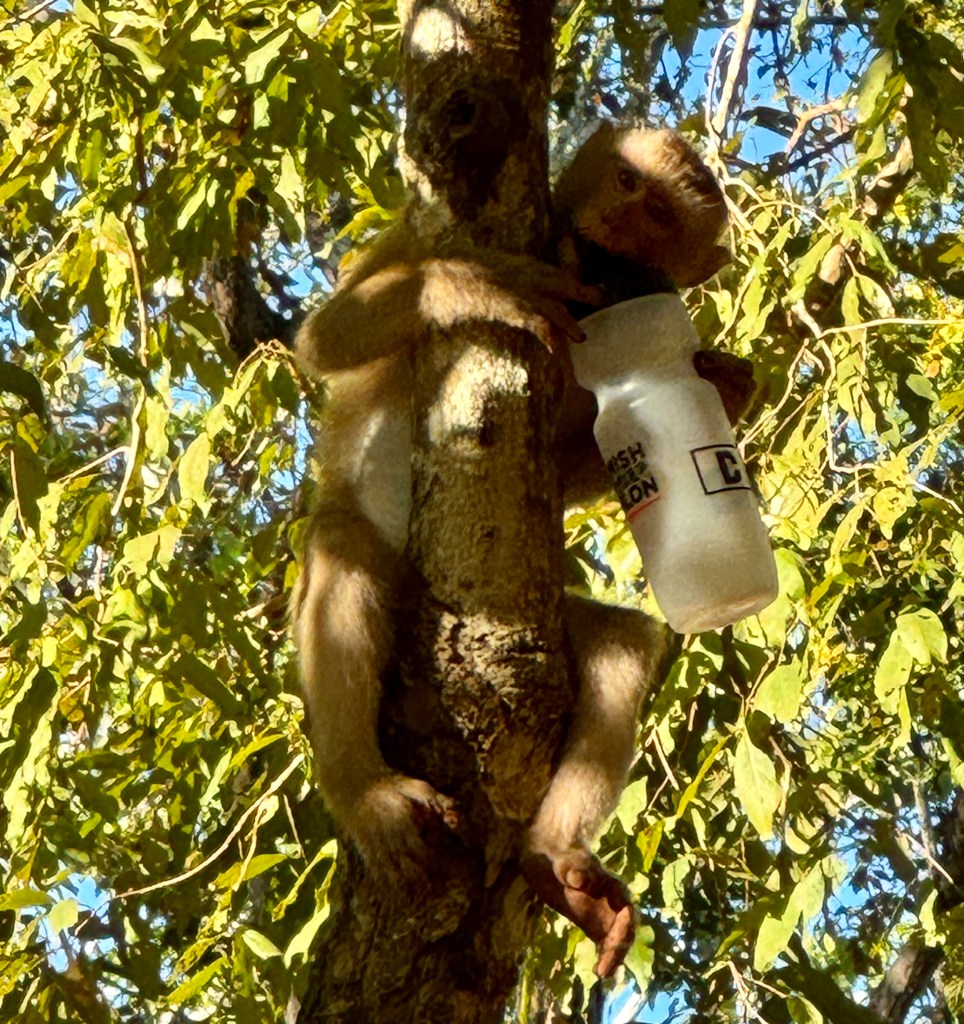
As we were leaving, we were watching some of the macaques hanging about, just as a group of young monks came up (+/- 10 year olds) and started throwing small packages of some sort of junk food to the monkeys. I immediately mimed my disapproval. They looked at me blankly and threw more packages. Oh well………what does one do? What does one think?
 OVER THE HILL AND BEYOND
Encore un article très intéressant. POUR CLAIRE, je me souviens d’avoir rencontré un de tes amis cambodgiens avec toi, Nicole et André à Toronto en 1985. Nous étions allés visiter Nicole qui demeurait à Hamilton à cette époque. Tu étais venue d’Ottawa (je crois) pour nous voir. Ensuite , nous étions allés au Zoo de Toronto et ton ami était venu nous rejoindre. Son nom est CHONG. J’ai une photo de toi et lui au Zoo. Je challenges ta mémoire n’est-ce-pas??? llooll Je vous souhaite une bonne continuation en Thailande et j’attends avec impatience un autre article tout aussi intéressant. Thanks Jim for all those posts so full of informations and thoughts of humans and landscapings.
LikeLike
Ahhh Linda! Tu m’étonneras toujours. Non je ne m’en rappelais pas mais maintenant j’ai une image très claire de cette occasion. Merci de rafraîchir ma mémoire!
LikeLike
I love these posts, Jim. Your descriptions are so evocative of the places and how you feel experiencing them. Thank you for sharing them with us.
LikeLike
Thanks for the generous comment Denise. Travel of this kind is all about trying to get a sense of one’s surroundings- the people, society, economy, geography, etc. Language barriers make it much more challenging. We’ve just arrived in Thailand and are in a small, backwater of a town – so much new to figure out.
LikeLike
Salut vos deux,
Tres interessant encore! Jim tu ecris beaucoup. C’est incroyable Claire ta rencontre,c’est fou. Bonne route!
Merci!
LikeLike
That was a fascinating story. It seems to have changed a lot over the years, mostly for the better. The meeting between Claire and Andrew was the highlight for me. One day I’ll show you some of my pics from Angkor – even though they’re a bit overexposed…
LikeLike
I can’t remember when you did your trip through this part of the world but as I continue to read about the convoluted politics, you must have been here during a still difficult period. Look forward to hearing your stories. On the surface the country is on a good trajectory but there’s lots going on behind the scenes….so, who knows?
Yes, the Claire and Andrew thing was really cool!
LikeLike
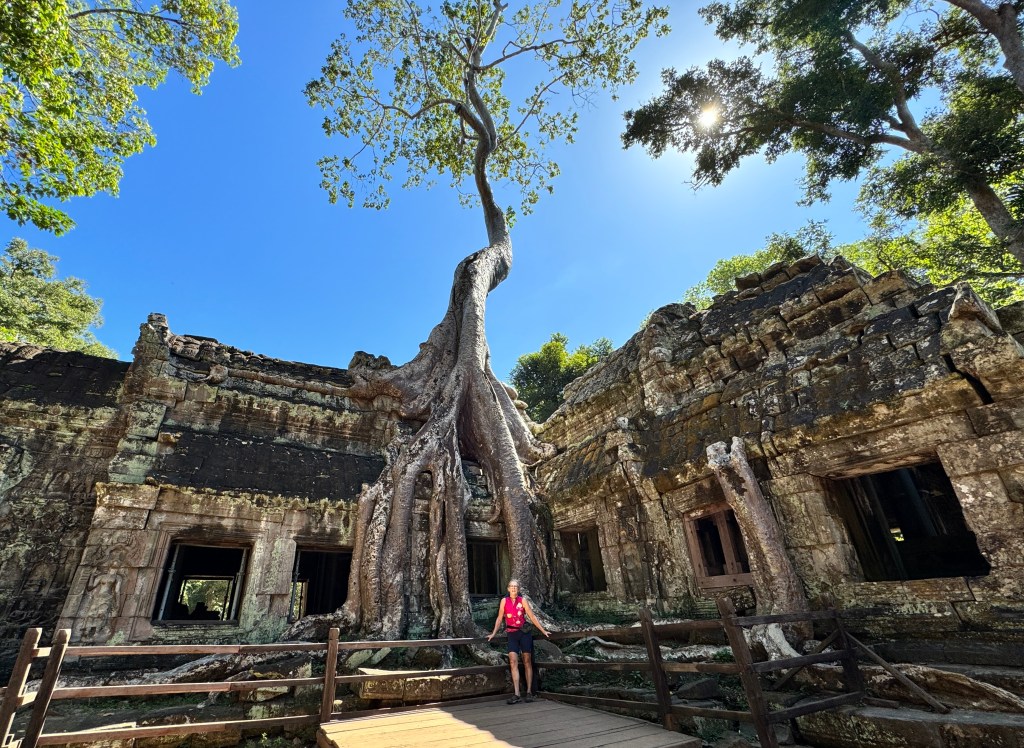
J’ai beaucoup aimé Angor Wat, particulièrement la partie la plus ravagée et sauvage. Étrange…mais c’est probablement la beauté des arbres, de la rusticité des racines qui reprennent leur territoire qui m’a envahit. À mon avis, il y a quelque chose de puissant dans cette grandiose nature qui prend ses aises en silence, lentement mais sûrement.
LikeLike
Effectivement mère nature nous répète qu’on peut faire bien des efforts mais elle aura toujours le dessus!
LikeLike
Hi Jim and Claire,
My last night in Mexico City – ready to fly home after 5 weeks of solo travel. Some great highlights, the traffic in this enormous city, not being one of them. However, I am now a huge fan of UBER! It is too cold here in Dec – about 5 degrees in the morning.
Your post brought back many memories – especially the Tonle Sap and the mangrove. You sure explored Angkor Wat more than I did. It is so impressive. I too am not a fan of organized tours, though my 2 hour tour of Chizen Itza in the Yucatan was superb! The monkey story was quite incredible. Did you ever recover your Alan keyset? Not sure what an Alan Keyset is? As you say at the end of your post – What to say? What to think? Cambodia is a perplexing, haunting, and still haunted country, and yet the people are so quick to smile! (I was there for nearly a year!)
Happy New Year, Feliz Ano Nuevo, Bonne Annee!
LikeLike
Thanks Ella. Look forward to hearing the highlights of your Mexico trip. Despite the levels of tourism it remains a great place to visit. We quite enjoyed Mexico City.
Allan keys are the most basic and therefore essential tool for bicycles. The multiple moving parts must have intrigued the monkey thief – we never saw it again.
Yes, the ‘What to do? What to say?’ comment was not just referring to the young monks but to the country in general. Our short visit raised more questions than answers.
LikeLike
Reading this on New Year’s Eve day so Happy New Year to you both! Fascinating blog and I’ve forwarded it to John as he spent time in Angkor Wat about 10 years or so ago. Finally a peak of sunshine on Ayr Drive after a very wet and grey December!
LikeLike
Thanks Arlene. Yes, we’ve been hearing about the grim December. Here’s hoping for a change in weather. It’s always amazing how a day or two of sunshine can change one’s outlook. We are hoping for lots of snow for our return – which is not that far off. All the best.
LikeLike